
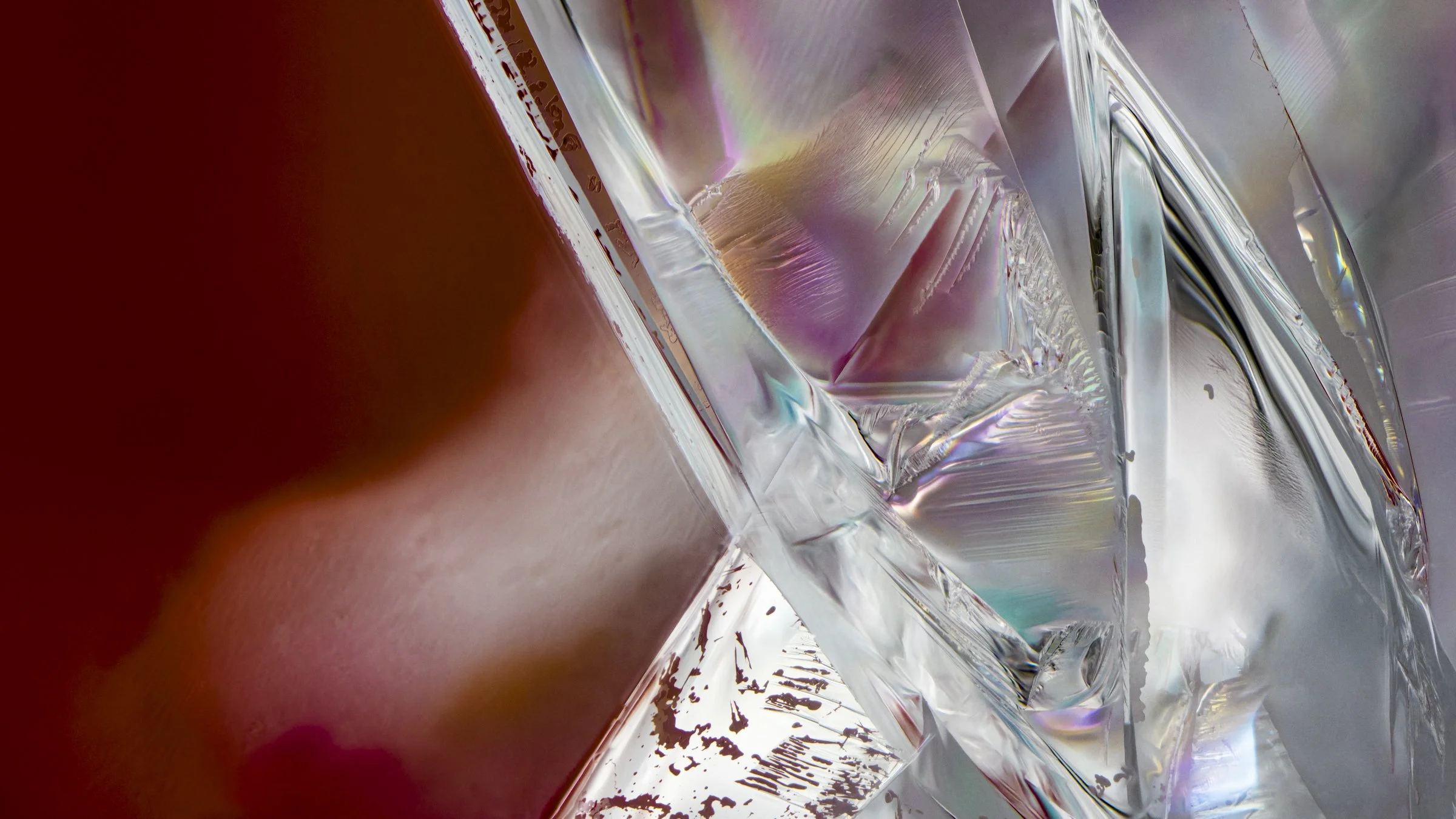
HIDDEN LINES
CESAR CUEVA
SEVENMARKS GALLERY
17 OCTOBER TO 22 NOVEMBER 2026
HIDDEN LINES begins with a shift in scale.
What am I looking at?
HIDDEN LINES
HIDDEN LINES begins with a shift in scale.
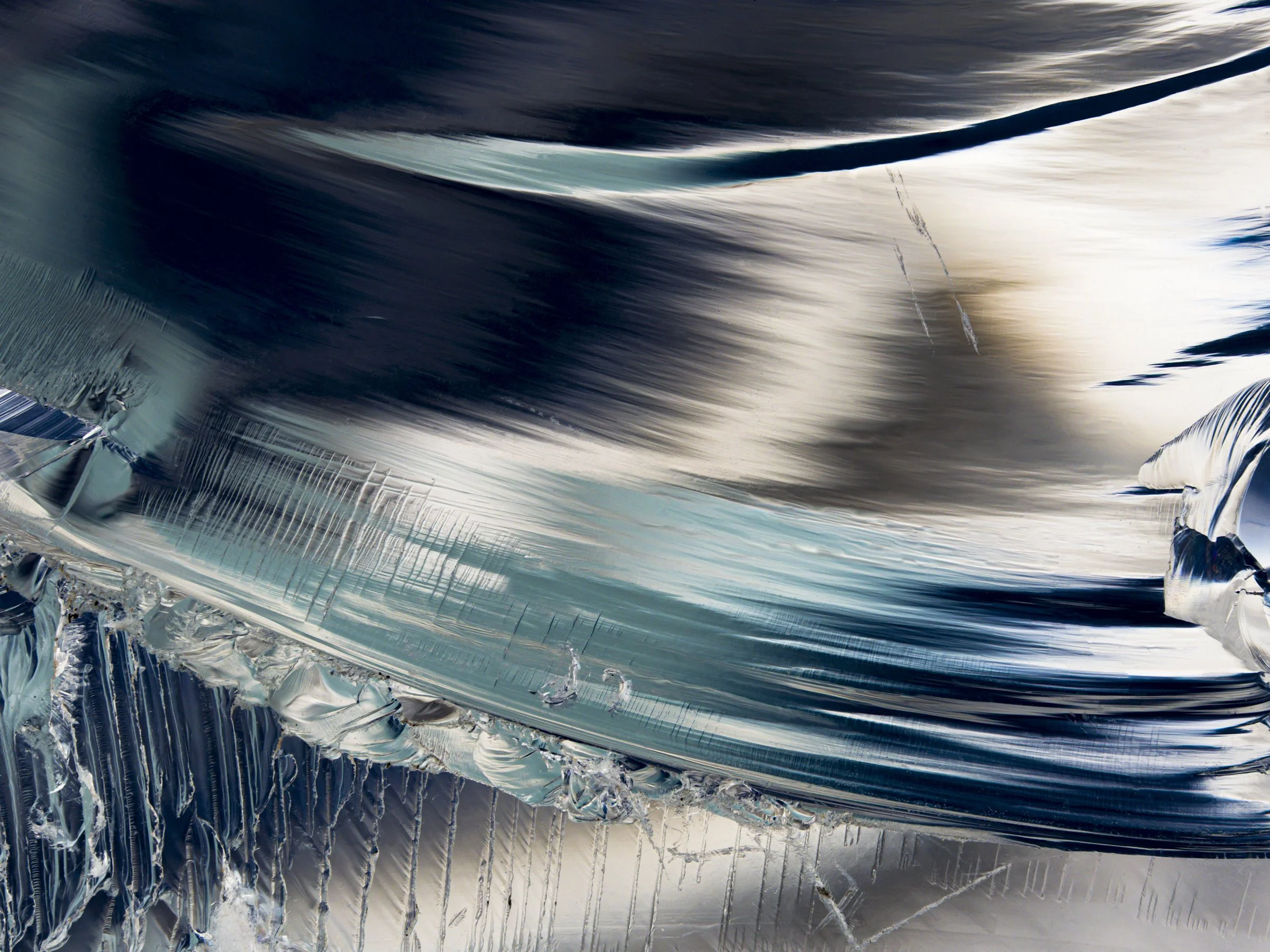
Working through extreme macro photography and focus stacking, Cesar Cueva uses the camera to move beyond the immediately visible and excavate structures held within light altering material.
Fractures, inclusions and growth lines become points of entry. As scale shifts, familiar references begin to fall away. Line, plane, colour, light and void take over. Forms emerge that can appear architectural, geological or entirely unfamiliar.
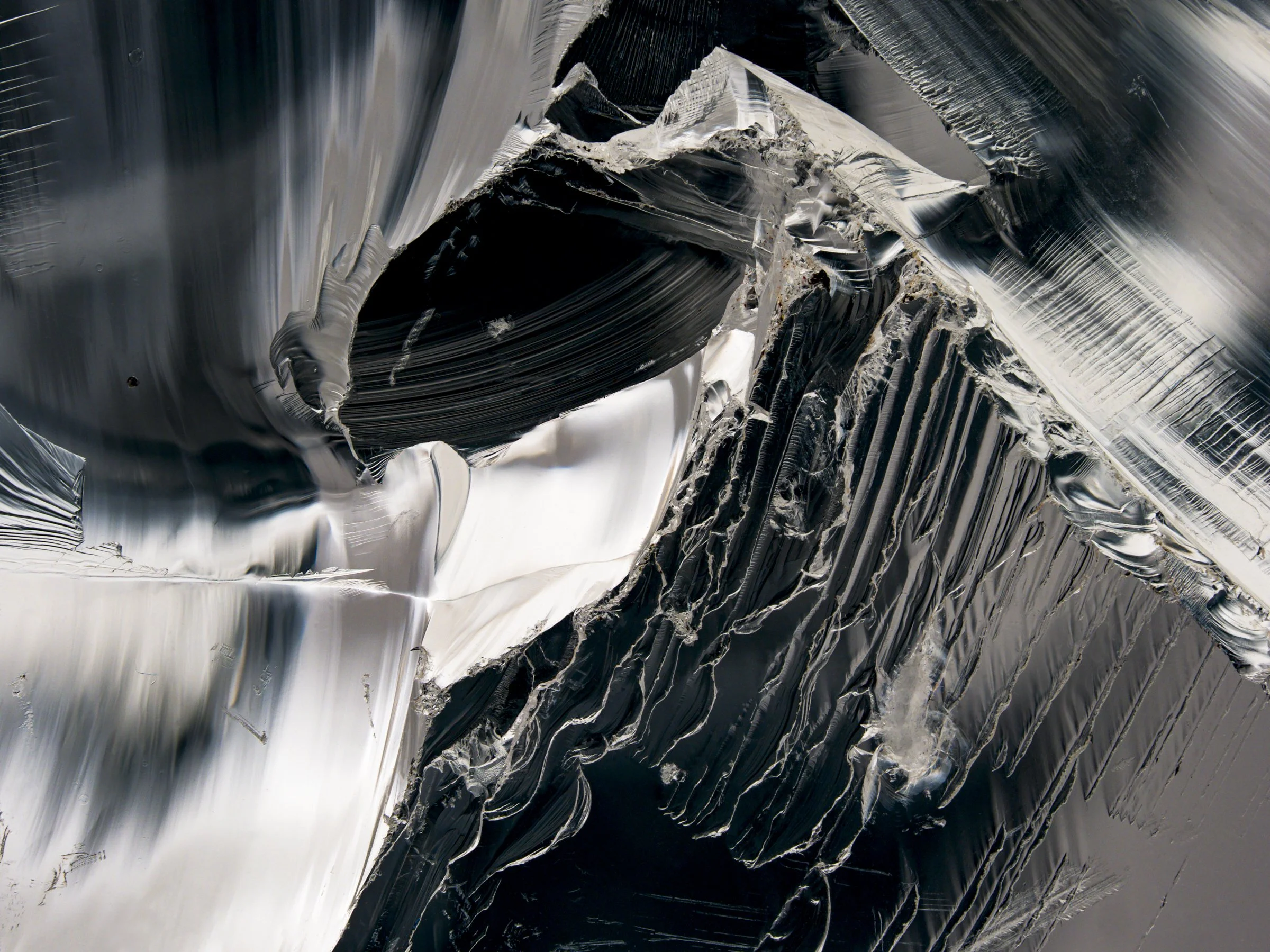
The process is both controlled and exploratory. Thousands of individual frames are captured and assembled to extend what the camera can hold in focus. Colour is introduced in response to each scene. The camera moves, light changes and compositions are discovered rather than predetermined.
Rather than documenting a subject, Cueva creates the conditions for observation, chance and discovery. Scale becomes a way of entering the material, allowing the camera to move through what might otherwise remain unseen.
HIDDEN LINES asks what becomes visible when we stop looking at what something is and begin looking at how it is constructed.
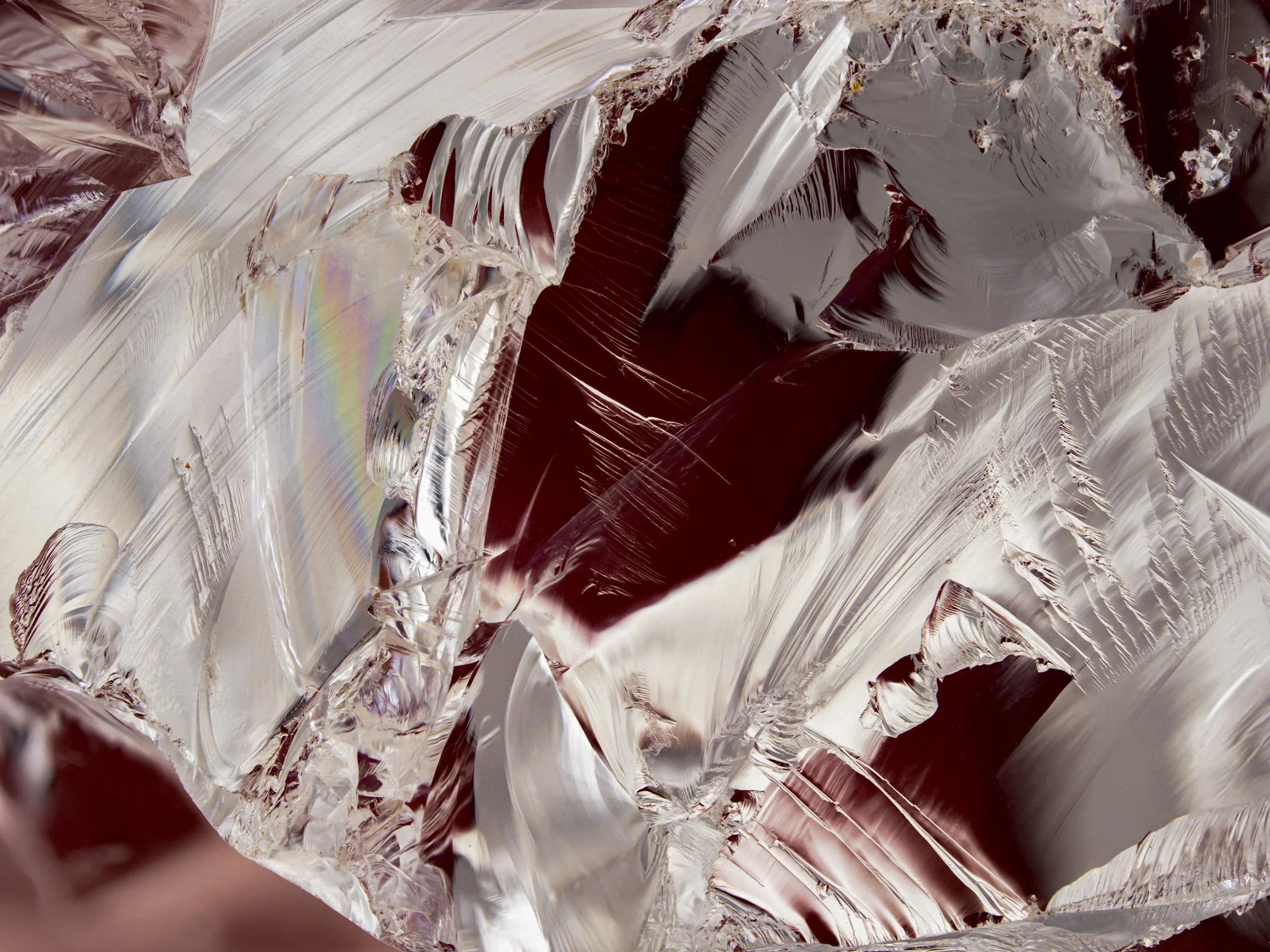
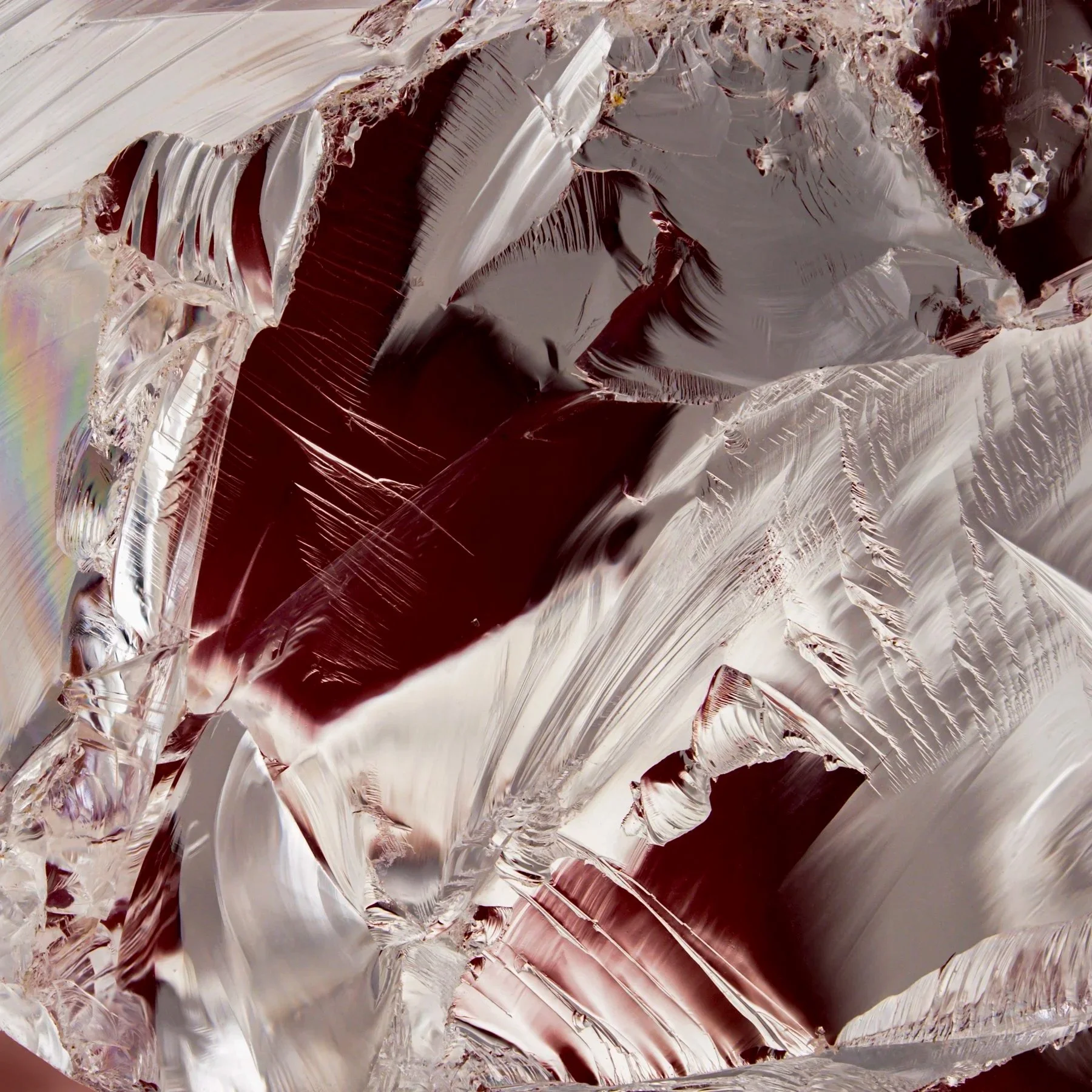
Scale changes what is visible.
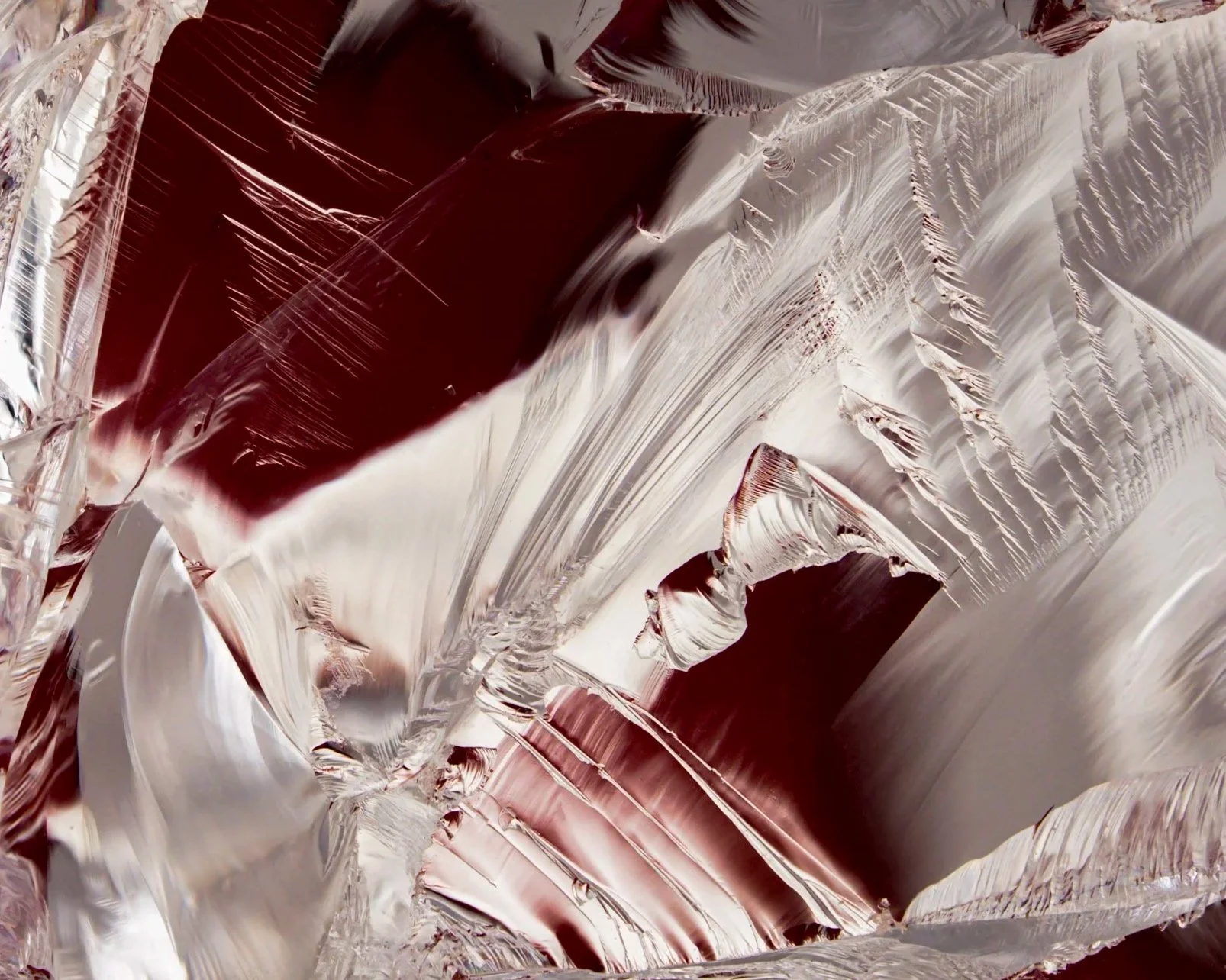
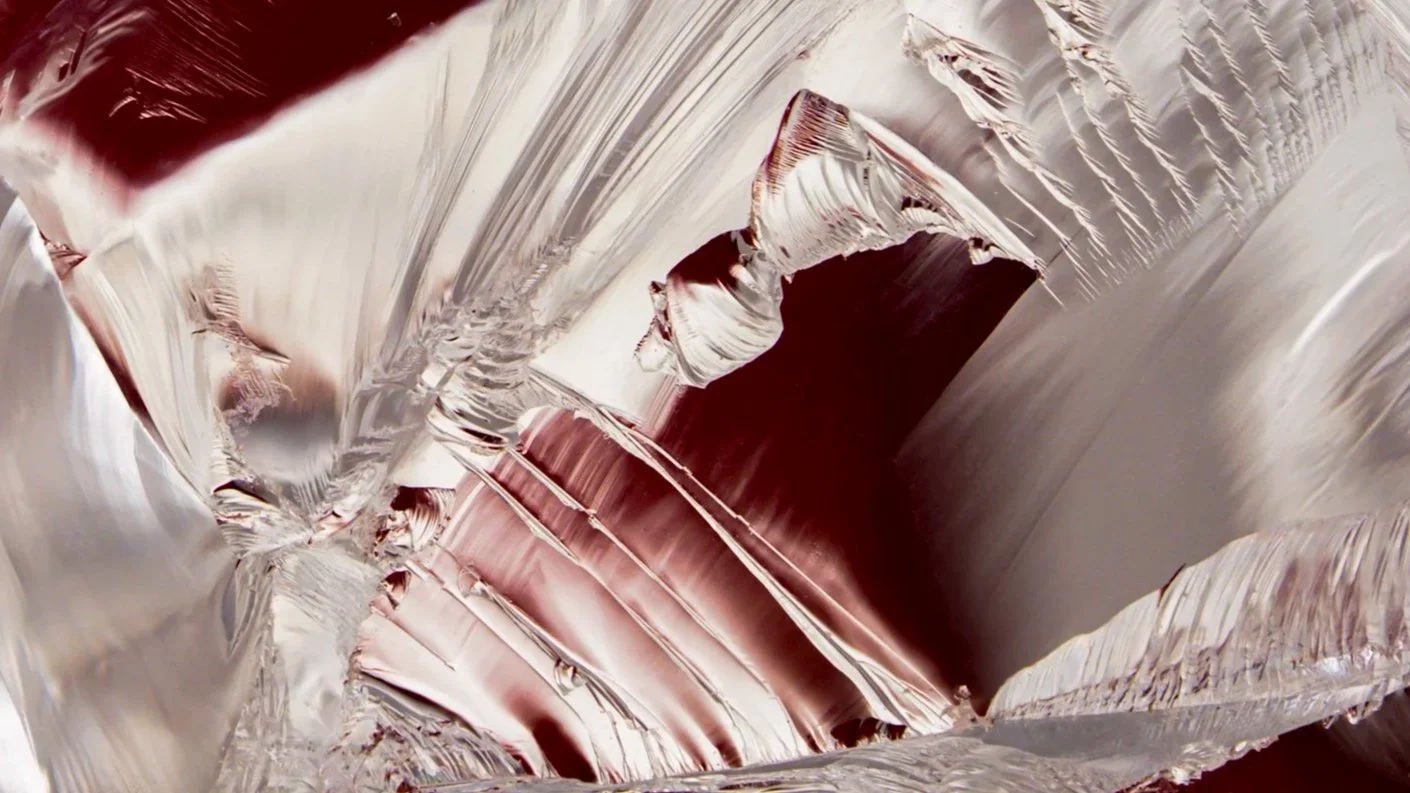
At one scale I recognise the thing. At another, recognition begins to fall away. I start looking instead for line, plane, fracture, colour, light and void.
EXCAVATION
Excavation is the search for what lies beyond the immediately visible.
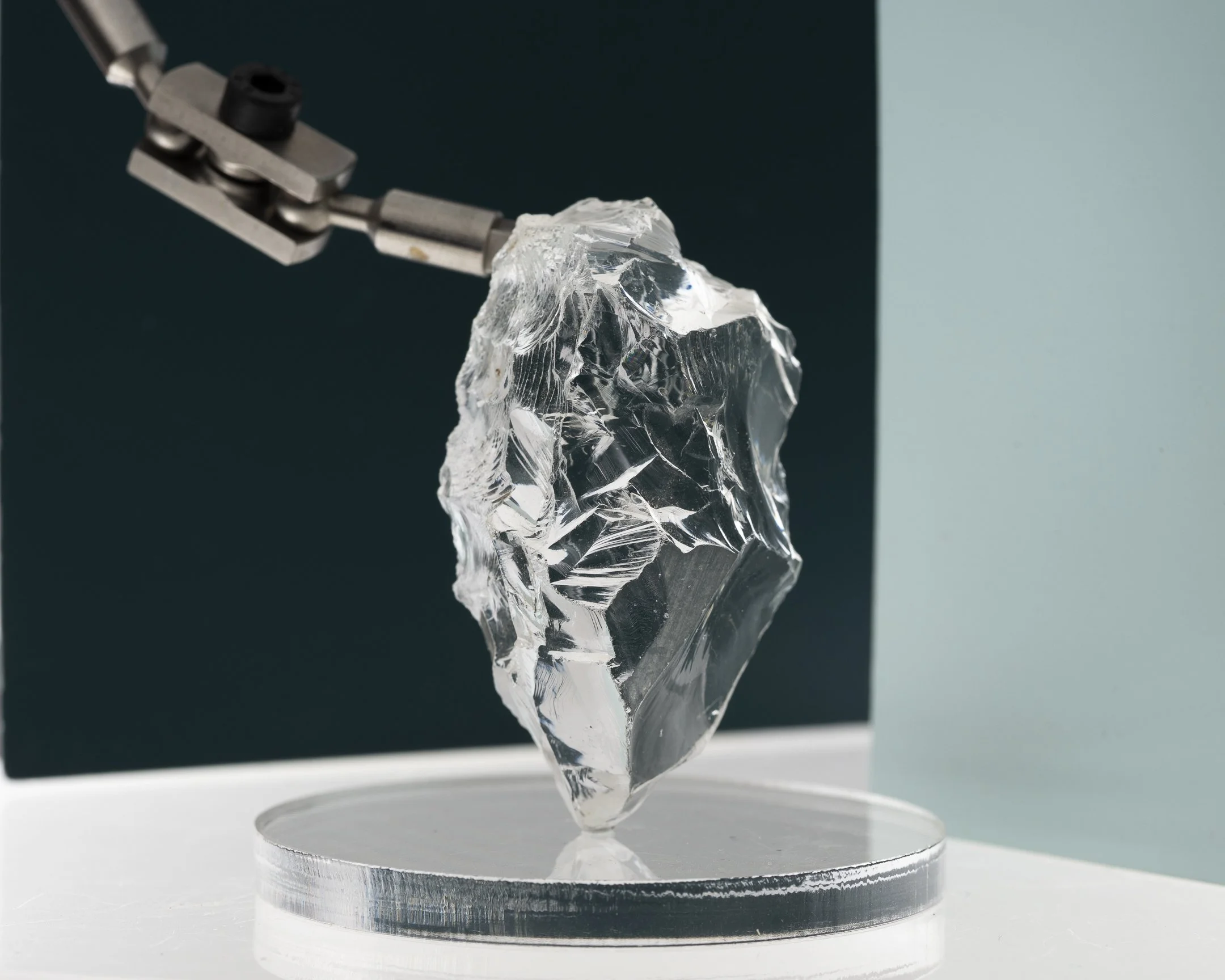
SETUP
The material, camera, light and colour are positioned to create the conditions for observation.
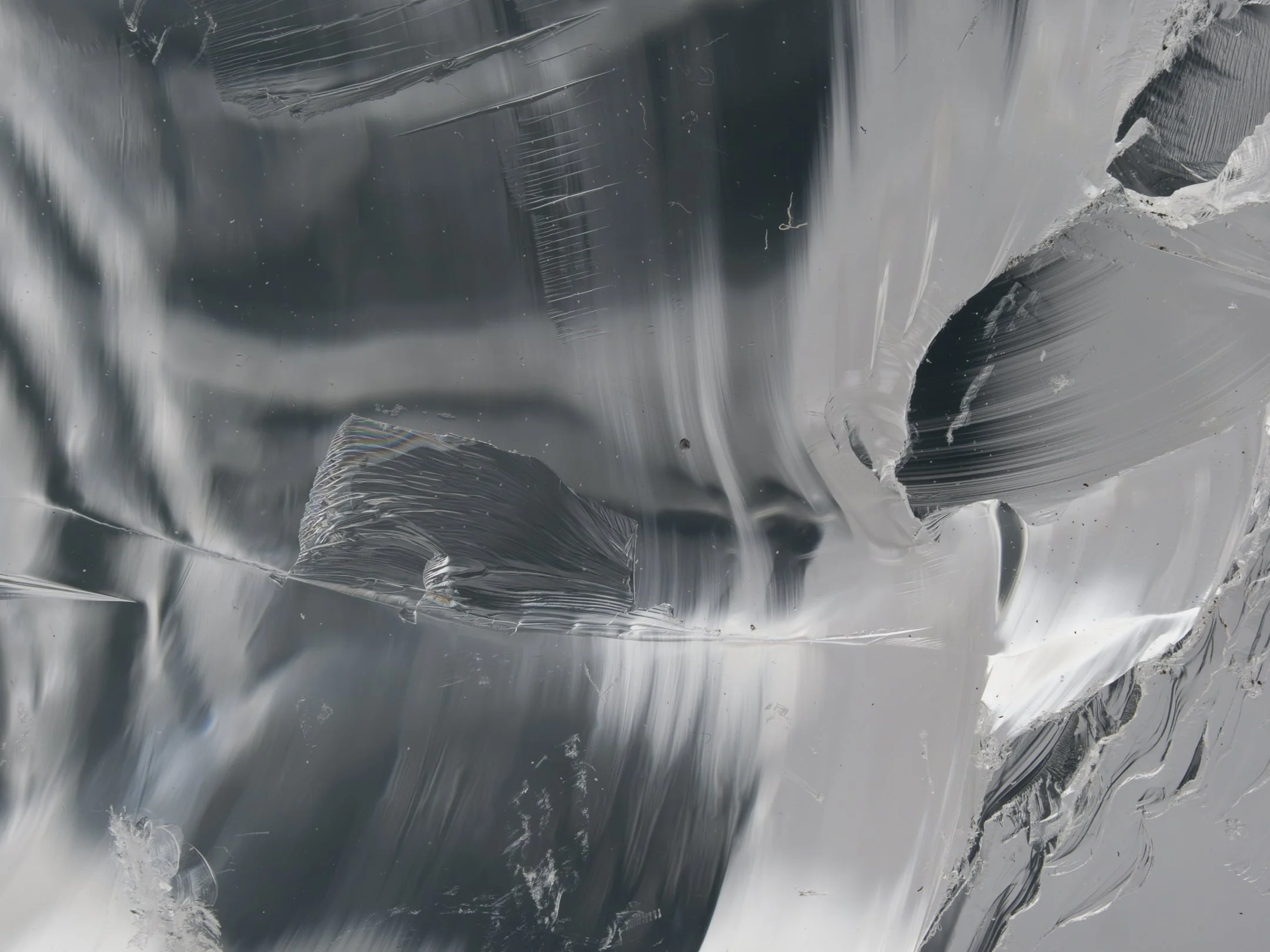
FOCAL POINT
At this magnification, only a narrow plane can be held in focus at any one time.
01/ SELECTION
Each frame shifts the point of focus slightly deeper through the material. What appears almost unchanged from one image to the next becomes a sequence of successive planes of focus.
02/ FOCUS STACK
The successive planes are analysed and combined into a single image, extending focus through a depth that cannot be captured in one exposure.
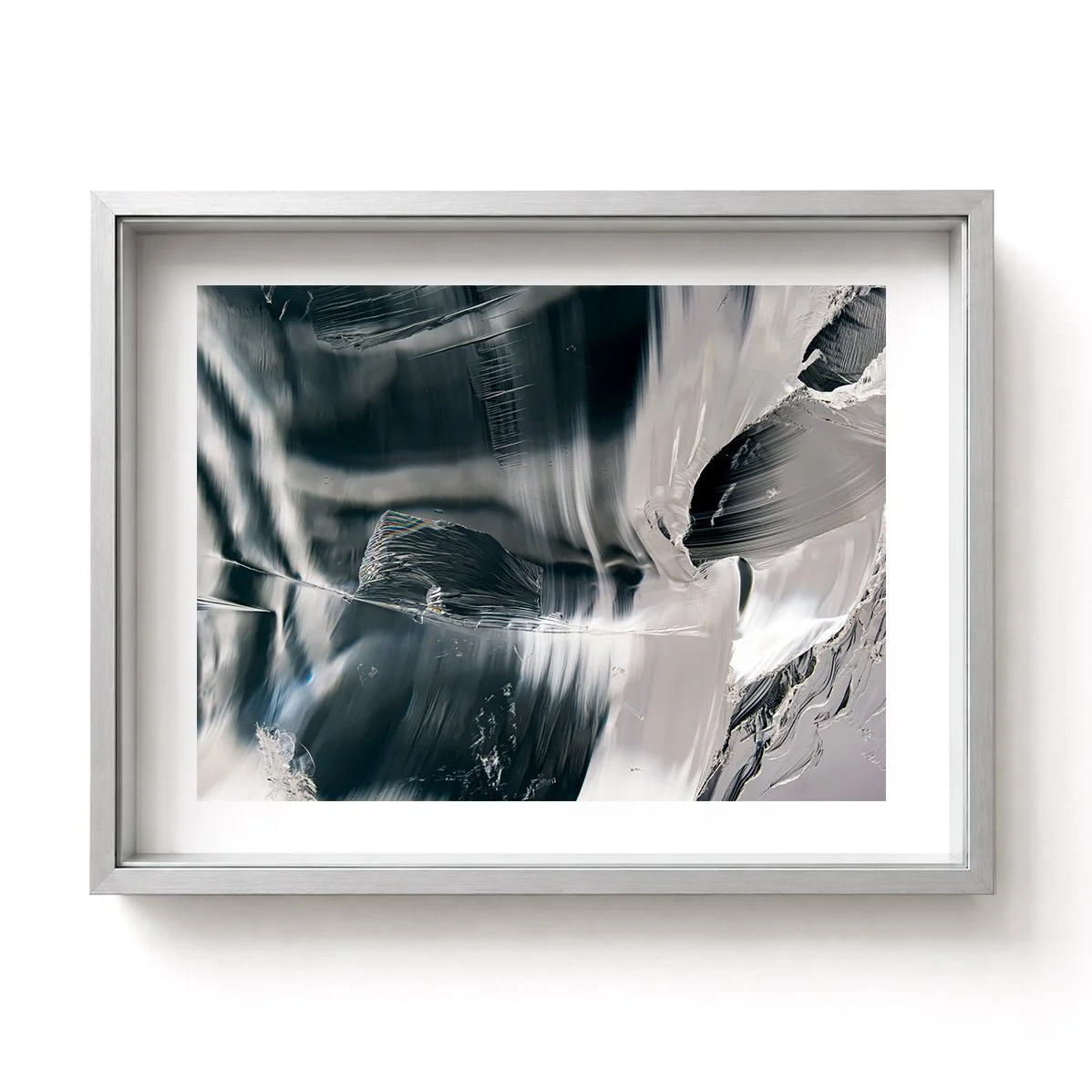
THE FINISHED WORK
The assembled image becomes a physical object, returning scale to the experience.
I began focus stacking as a practical way of photographing jewellery. At this scale, depth of field becomes extremely shallow, so I make a sequence of images at different points of focus and assemble them into a single image.
Over time, the technique became something else. Moving through those frames began to feel less like documenting an object and more like searching through it.
What am I looking at?
CONDITIONS
Conditions determine what can be revealed.
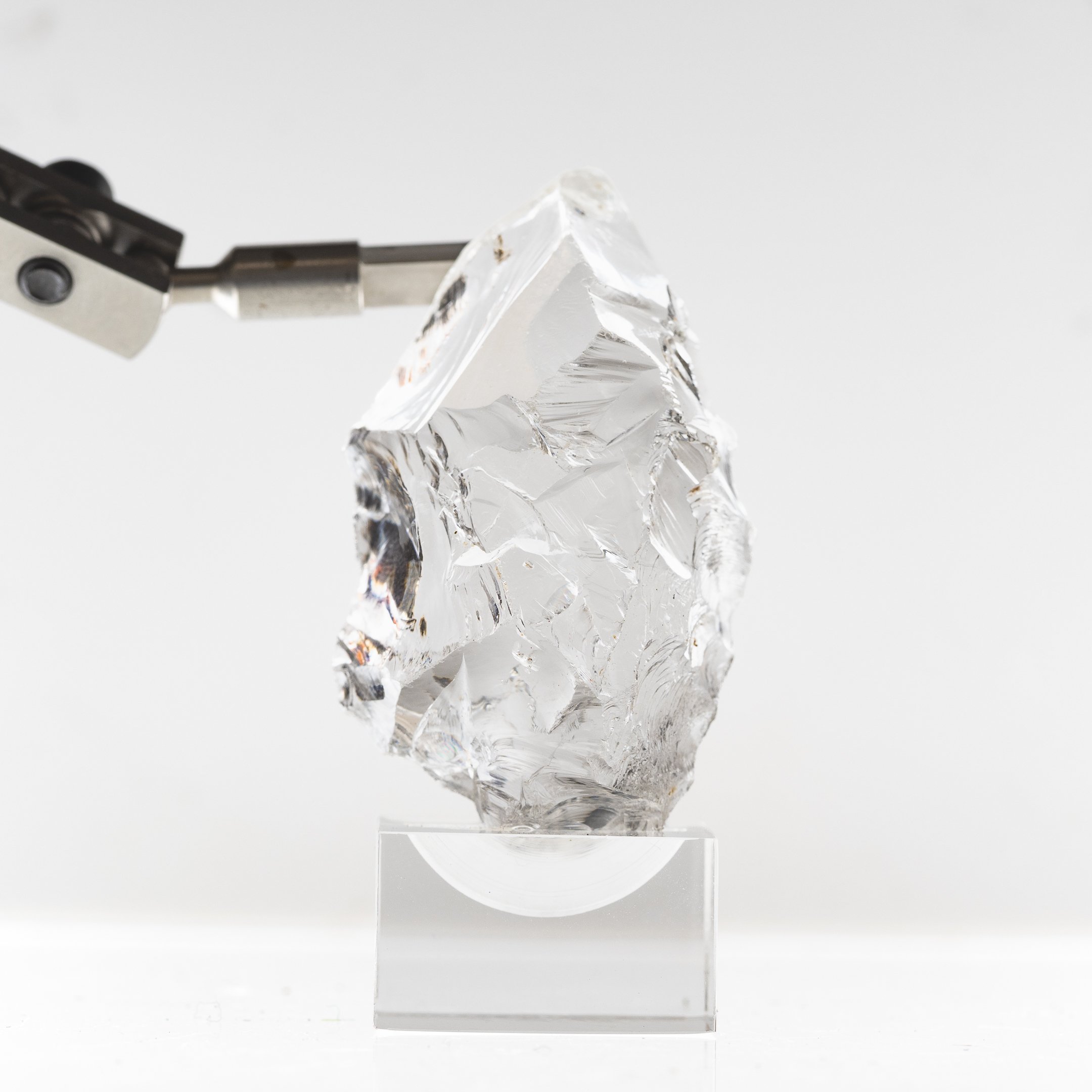
LIGHT
I position the light to reveal different structures within the material. Small changes in angle determine which fractures illuminate, which planes reflect and which recede from view.
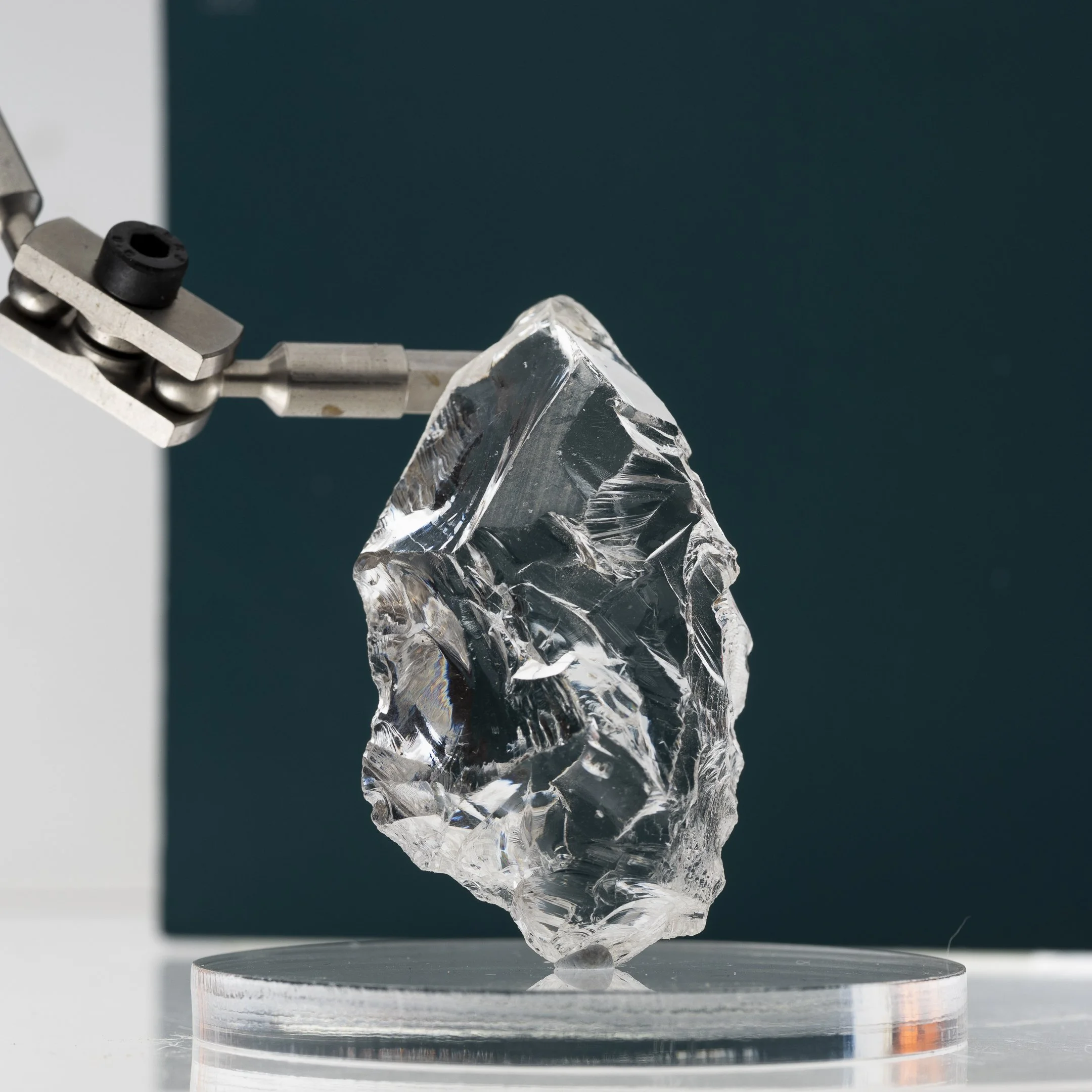
COLOUR
I introduce coloured fields around the material and observe how they move through it. Reflection and refraction carry colour into different planes, revealing edges and structures that were previously difficult to see.
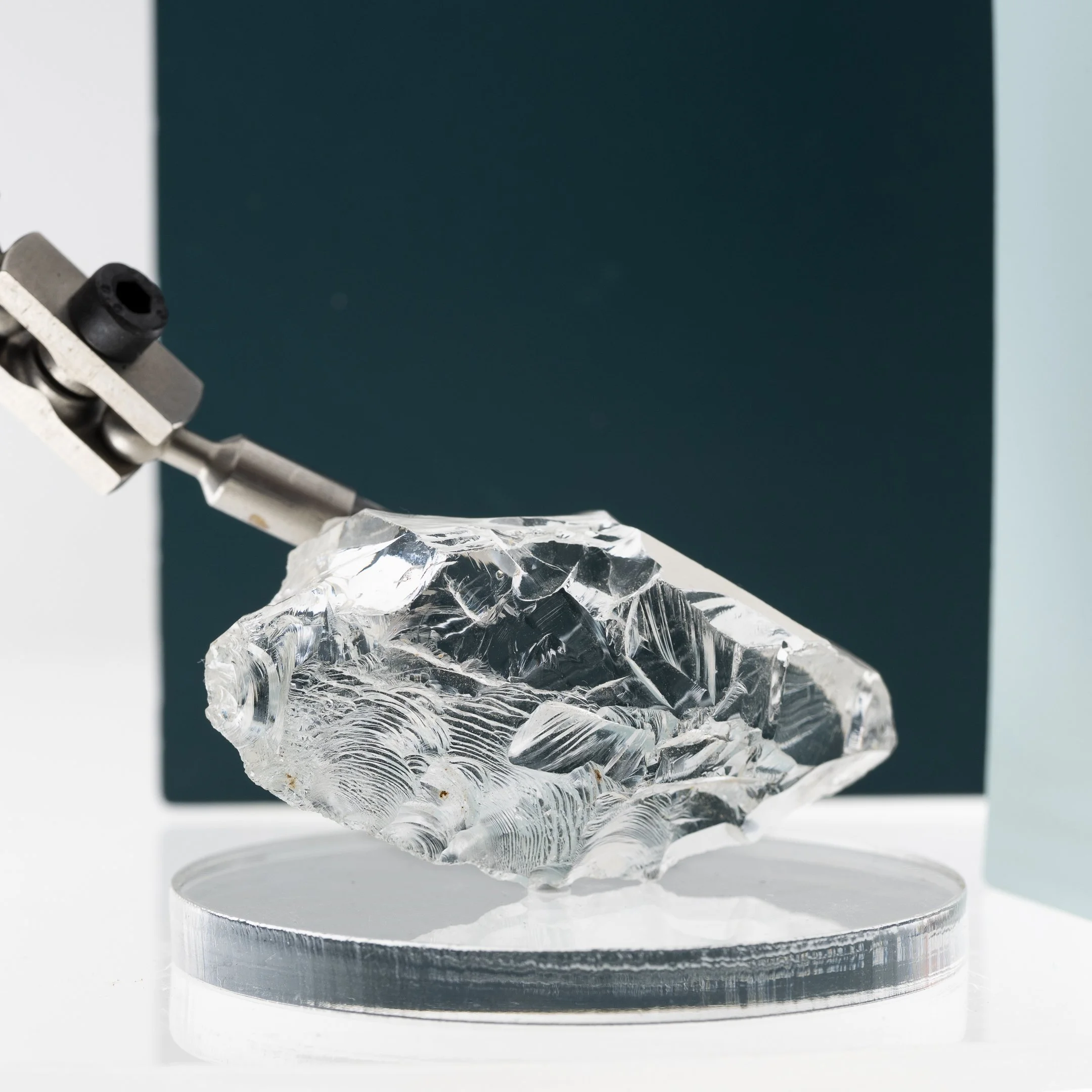
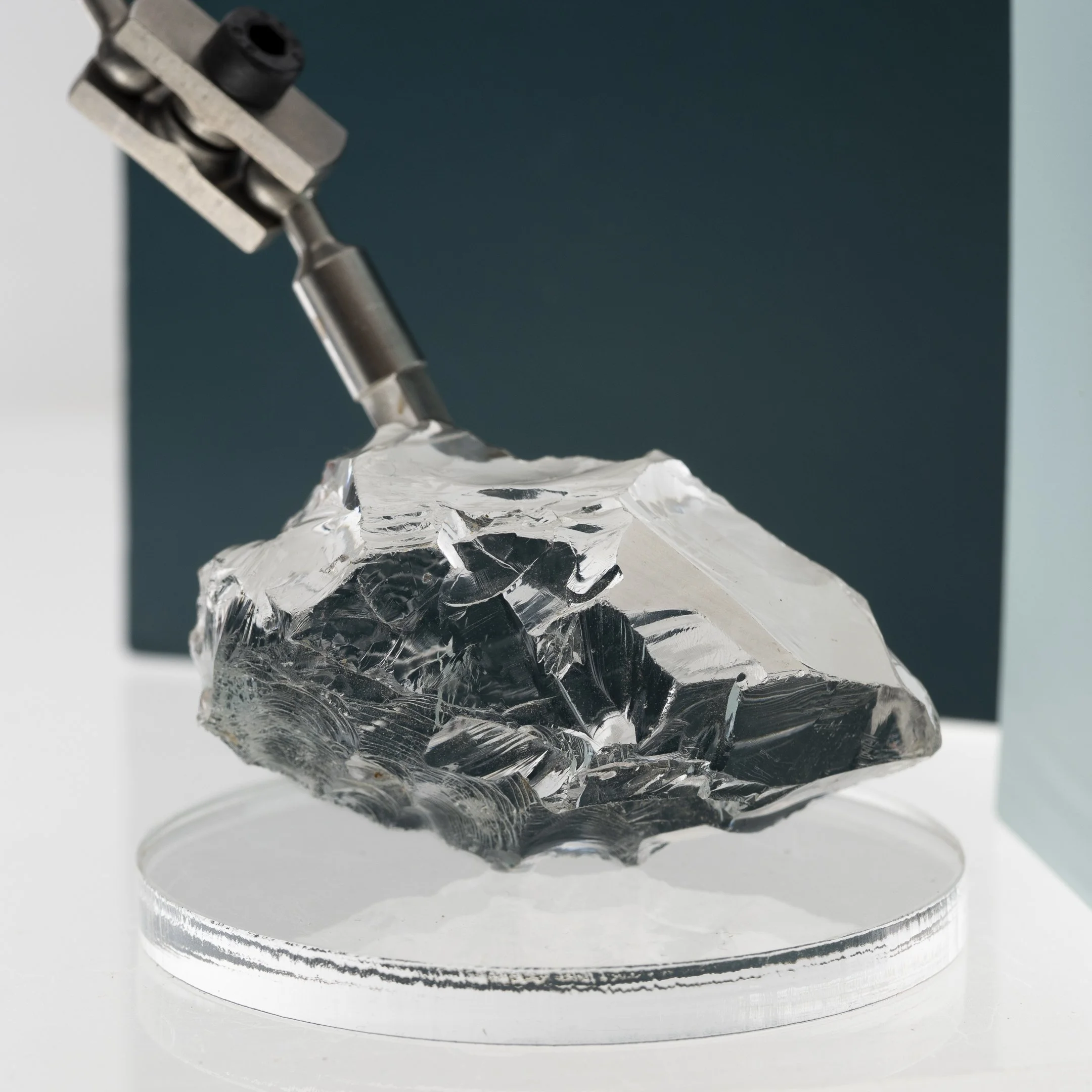
POSITION
I rotate and tilt the material in small increments, watching as different fractures and planes come into view. A small change in position can completely reorganise the image.
CHANCE
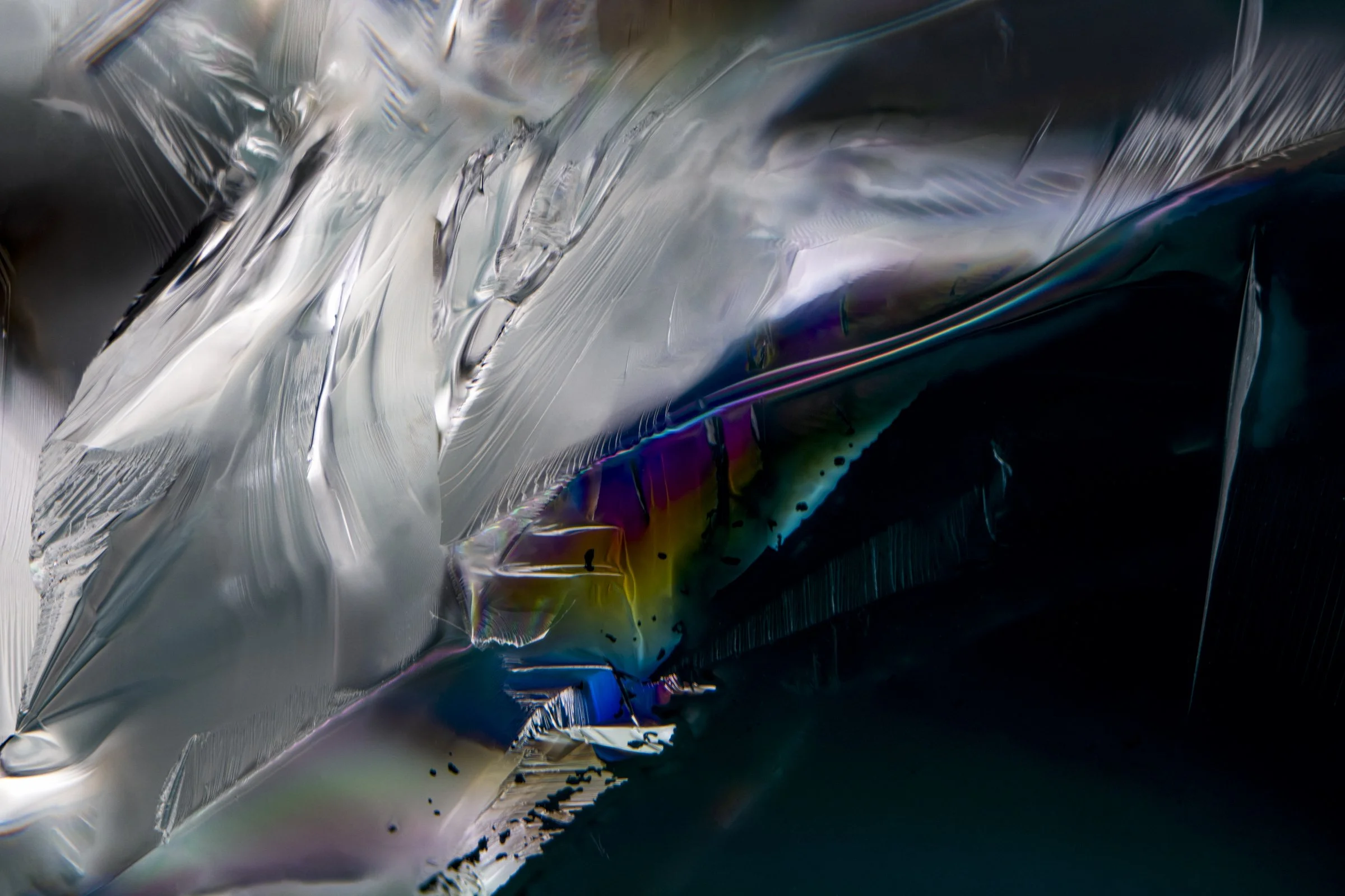
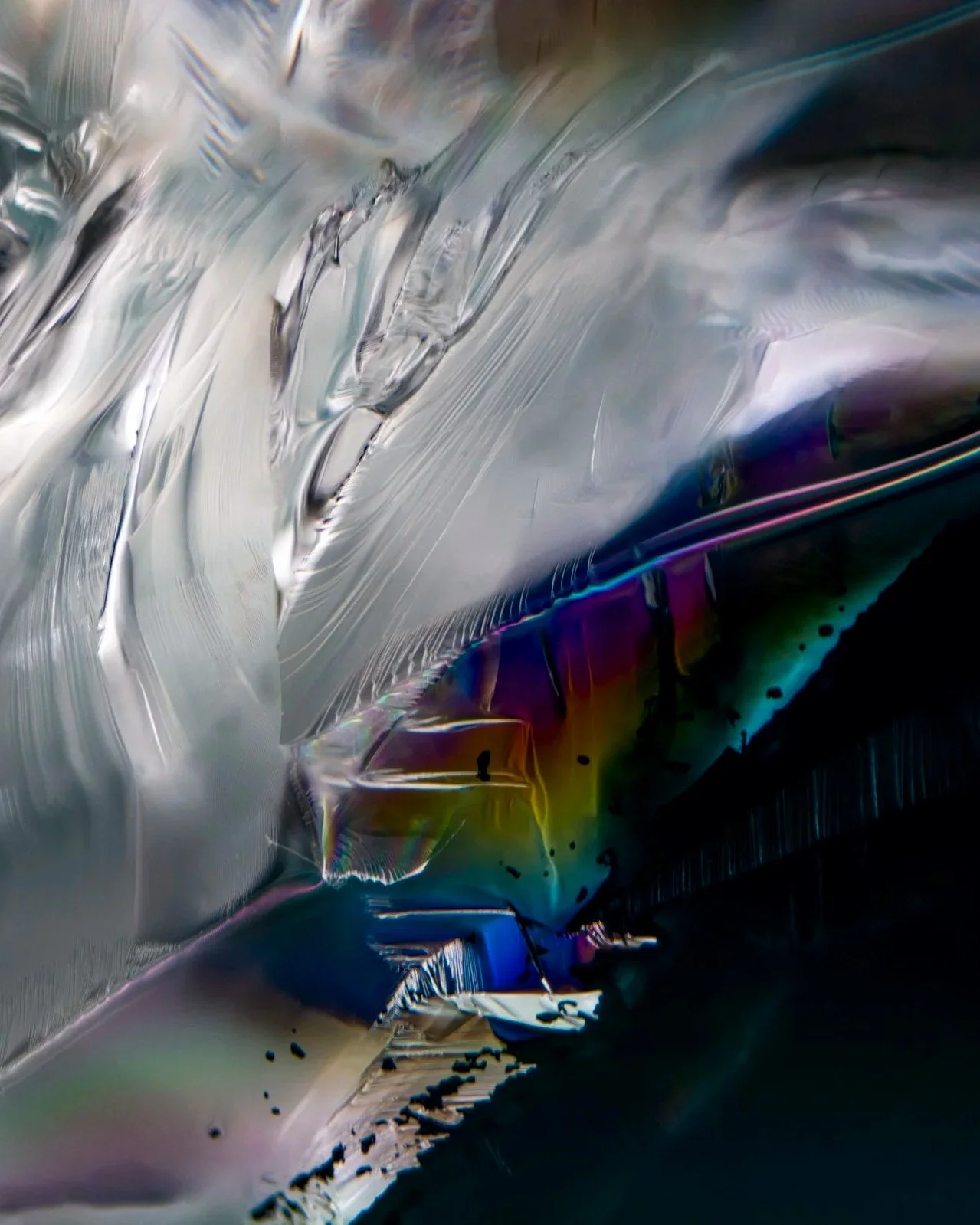
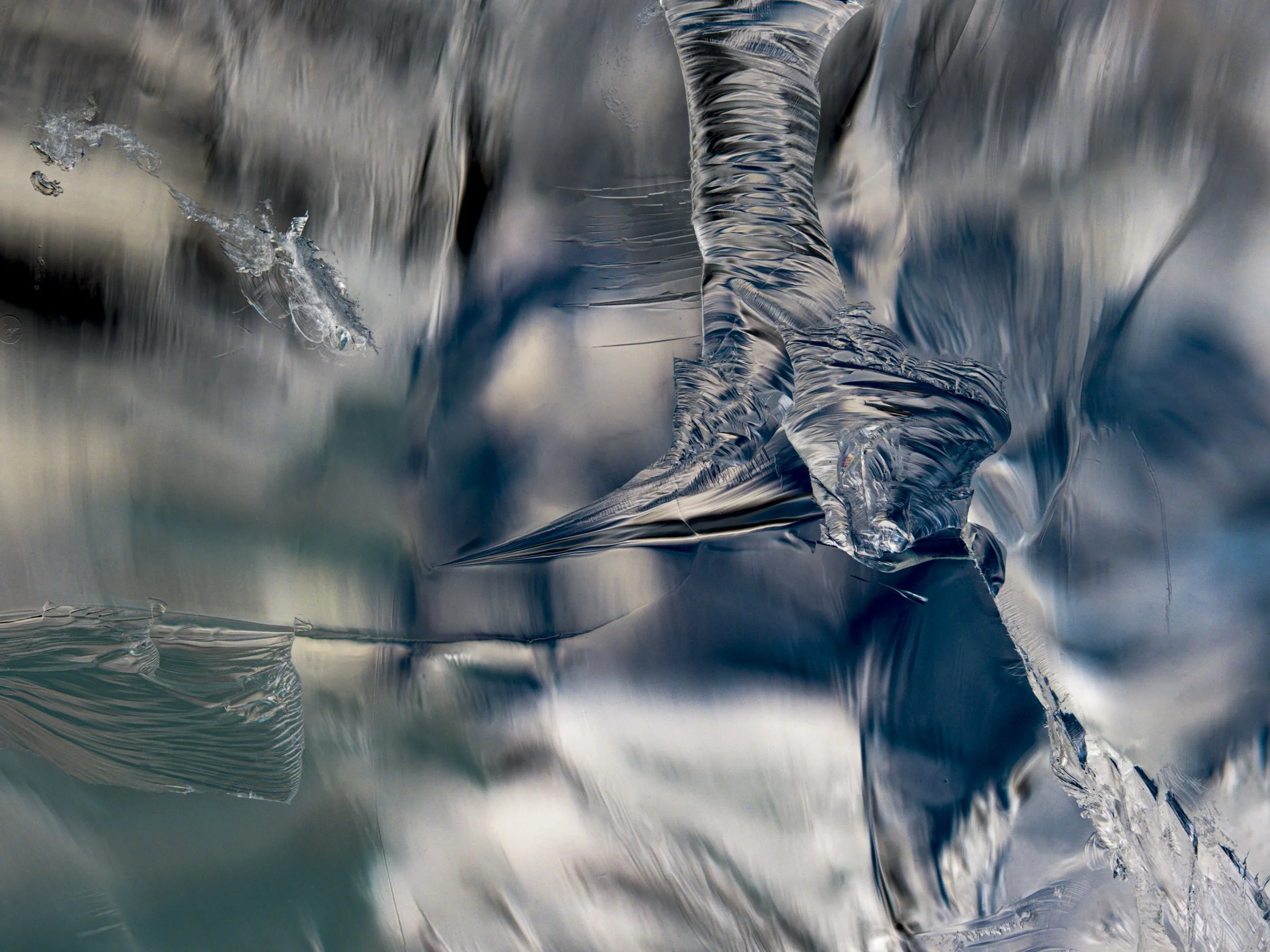
A small shift in position changed the image completely. The central fracture caught the light, colour appeared at its edge and the vertical structure behind it emerged. None of these relationships were planned.
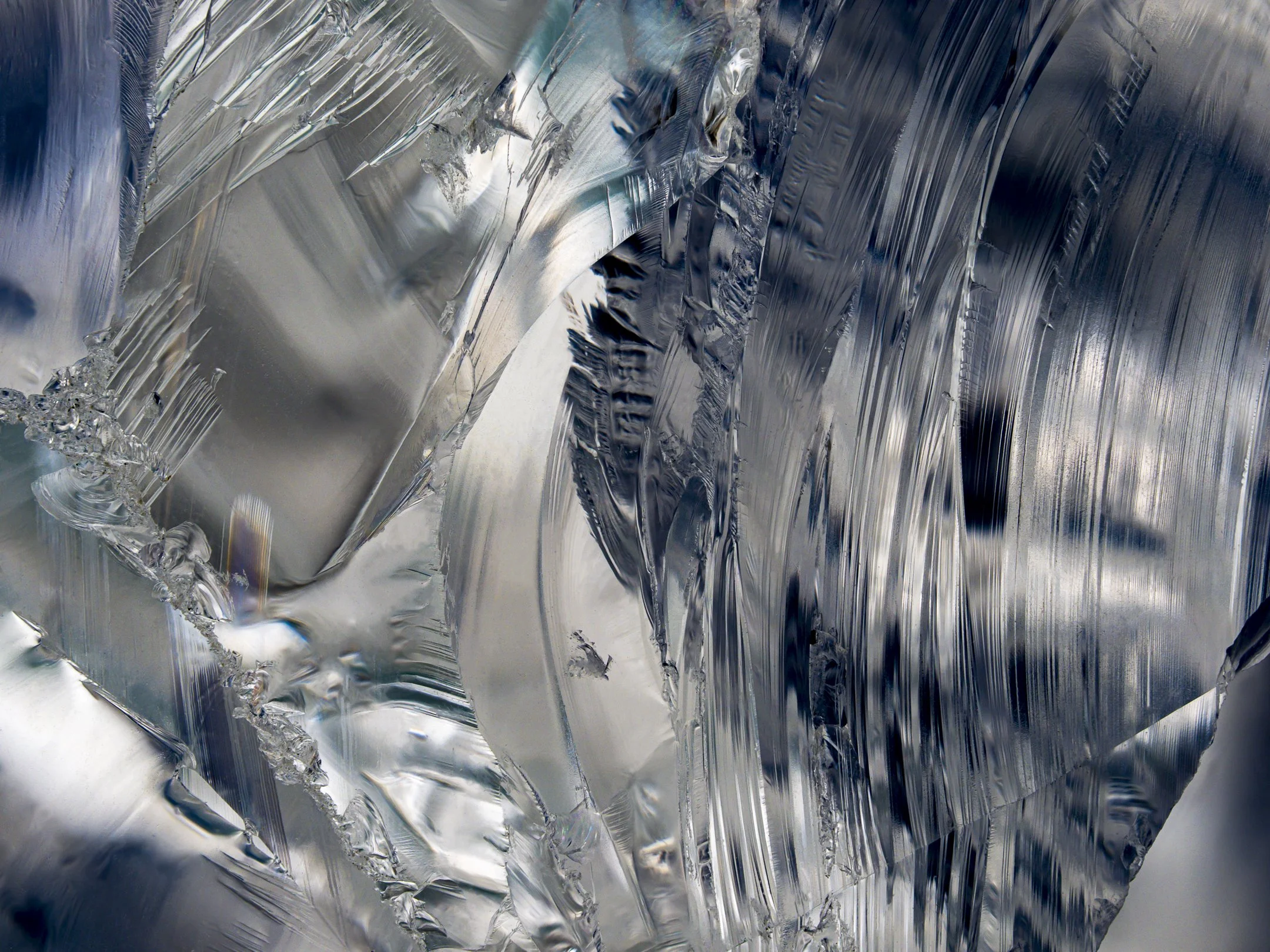
SELECTION
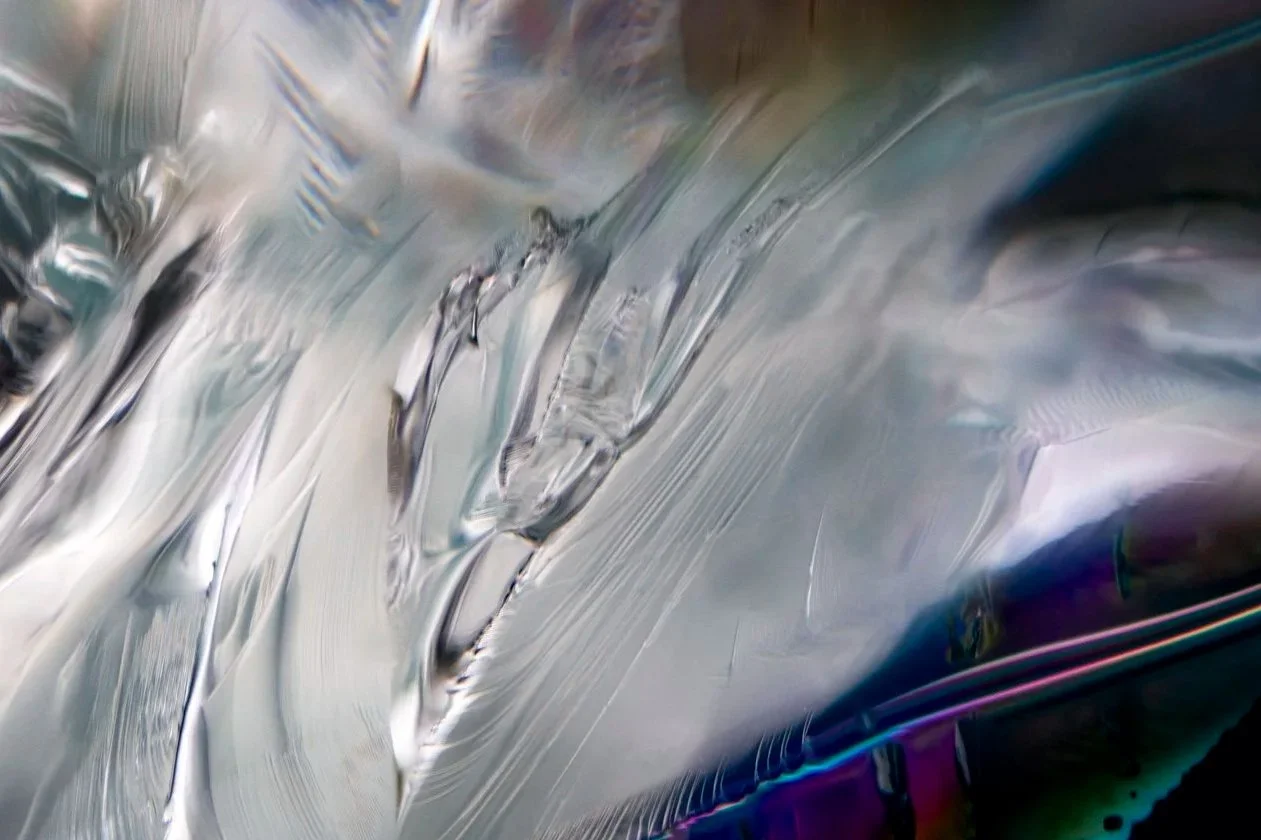
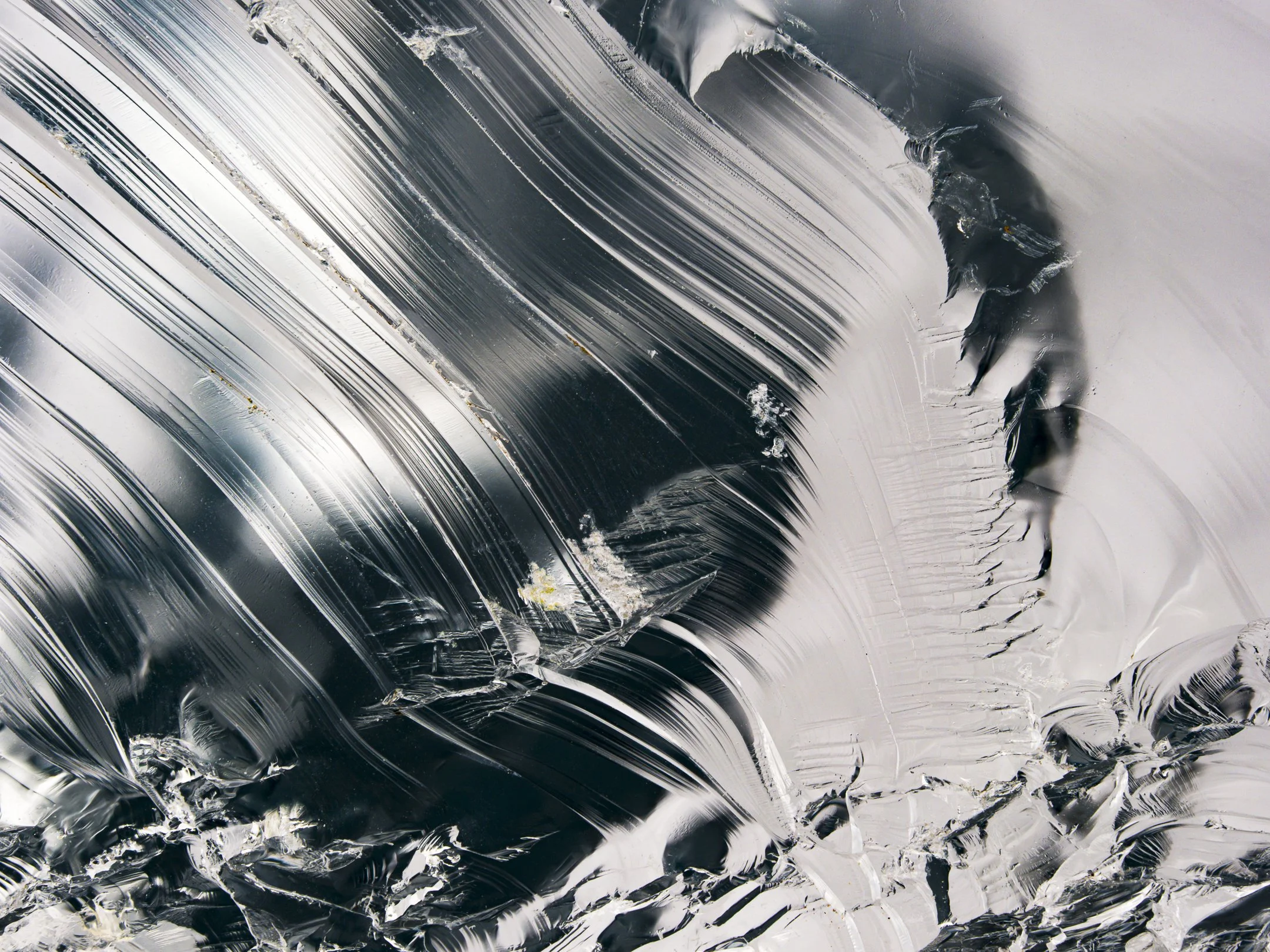
These images are all made from the same subject. Small shifts in position reveal entirely different structures, as lines, planes, light and void continually reorganise. Selection begins when one of those relationships holds together as an image.
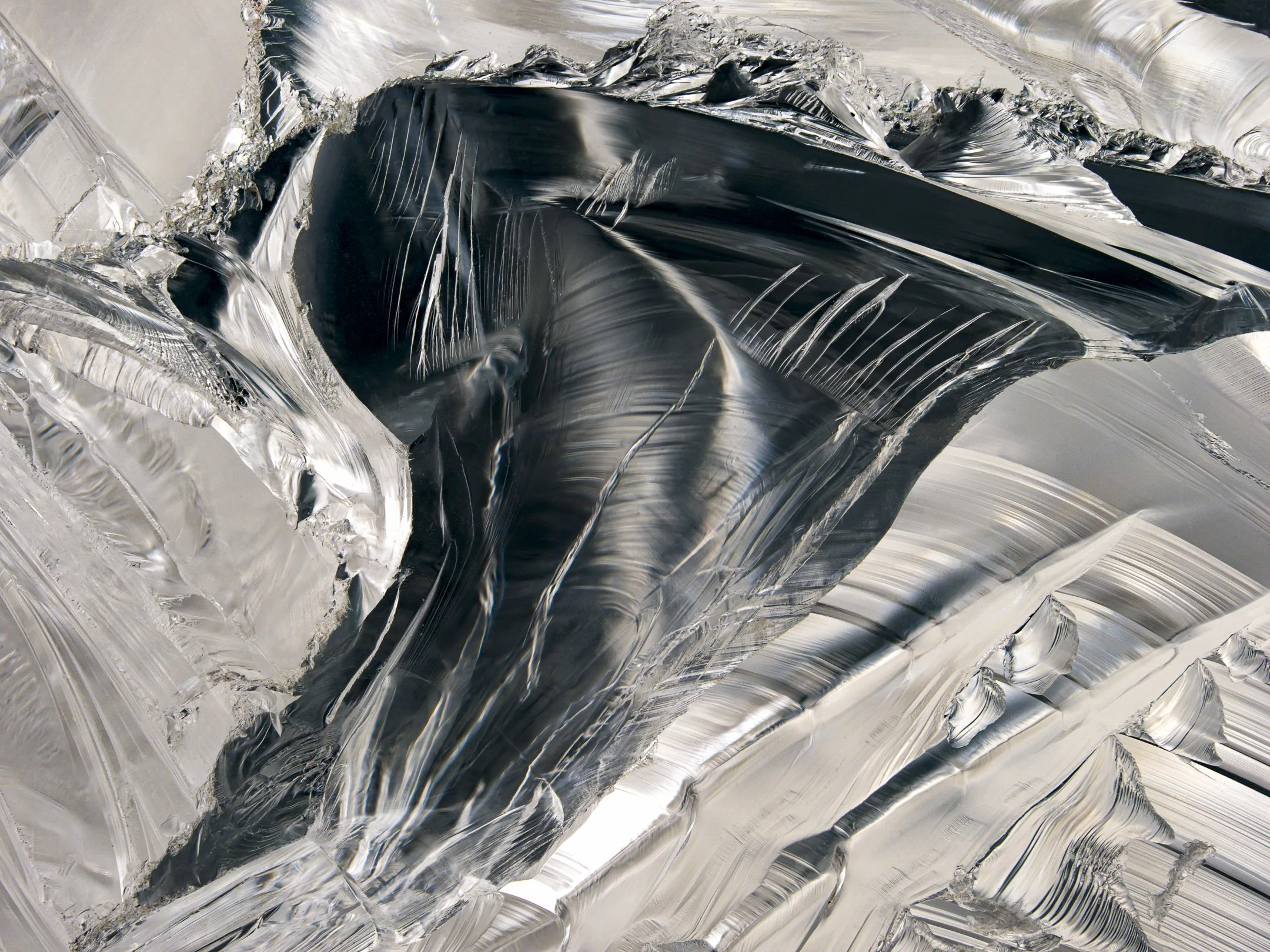
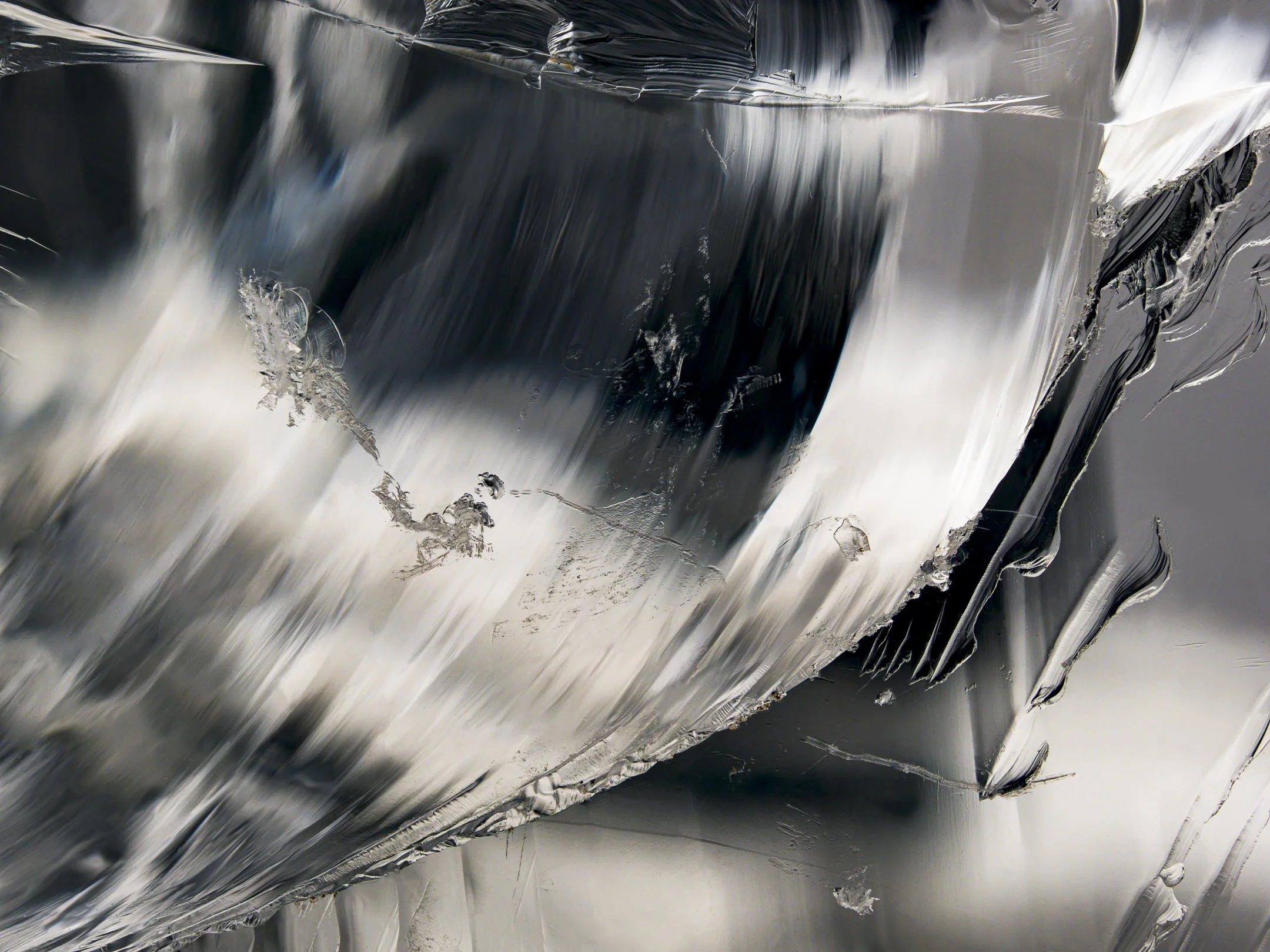
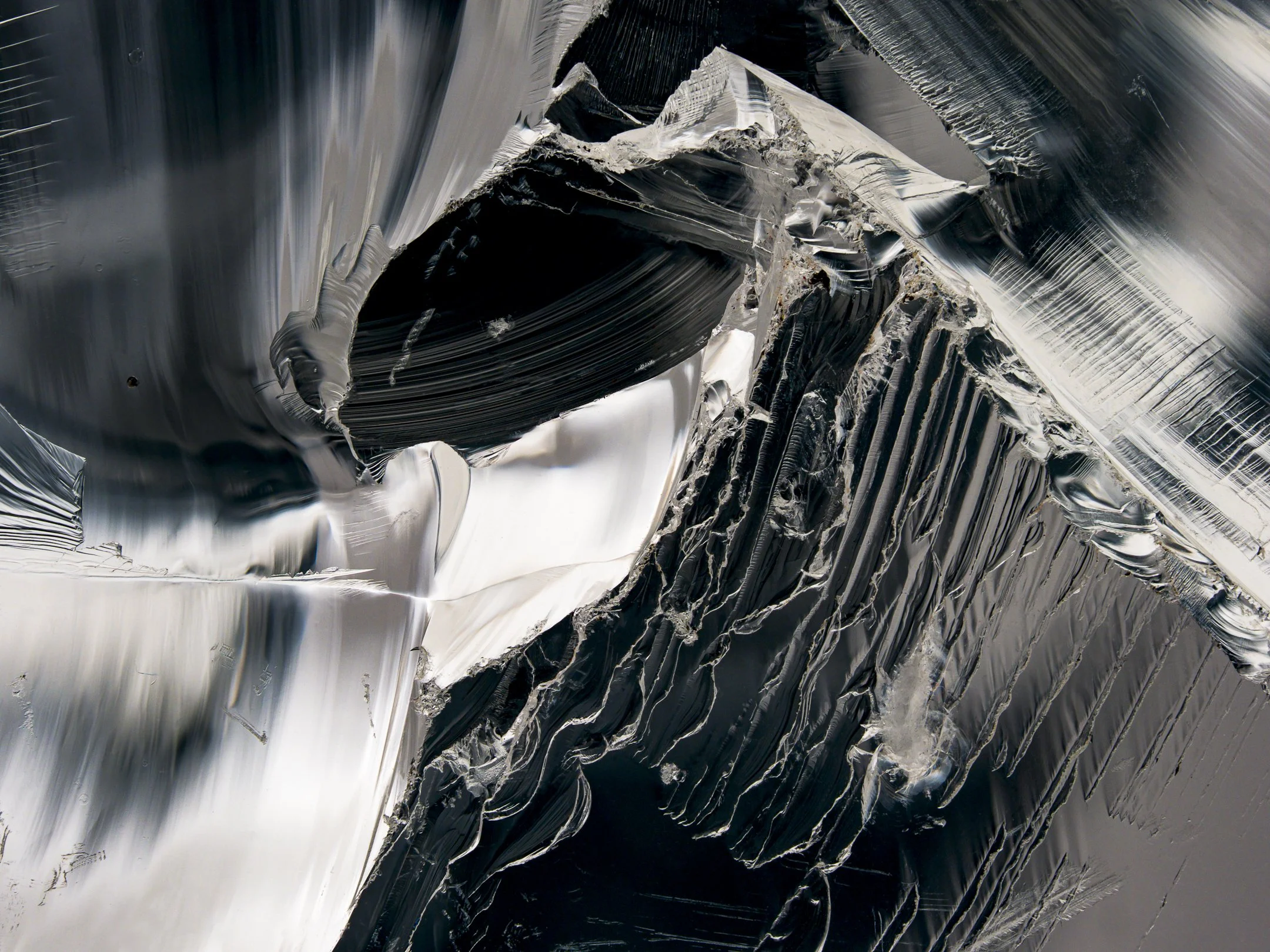
“Order is the condition you create so that disorder becomes legible.”
SELECTED WORKS
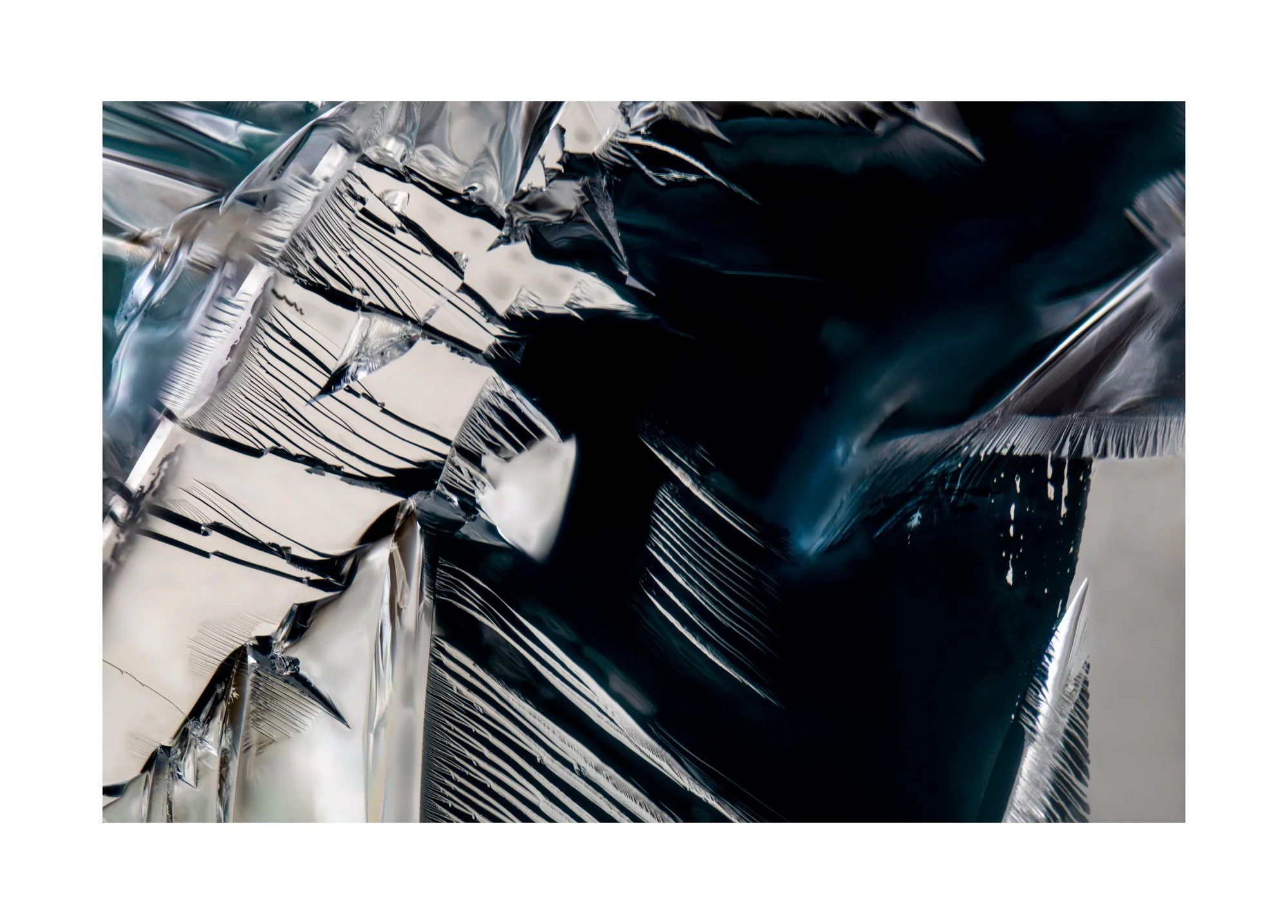
FIELD COMPRESSION 2026
I saw compression immediately. The planes seemed crushed together under pressure, recalling the compressed sculptures of César and John Chamberlain. It made me wonder whether I was projecting that sensation onto the image, or looking at evidence of forces the material had actually undergone.
I introduced a darker, denser palette to amplify that sense of weight, then watched as the colour moved through the different planes.
FIELD COMPRESSION came from that question.
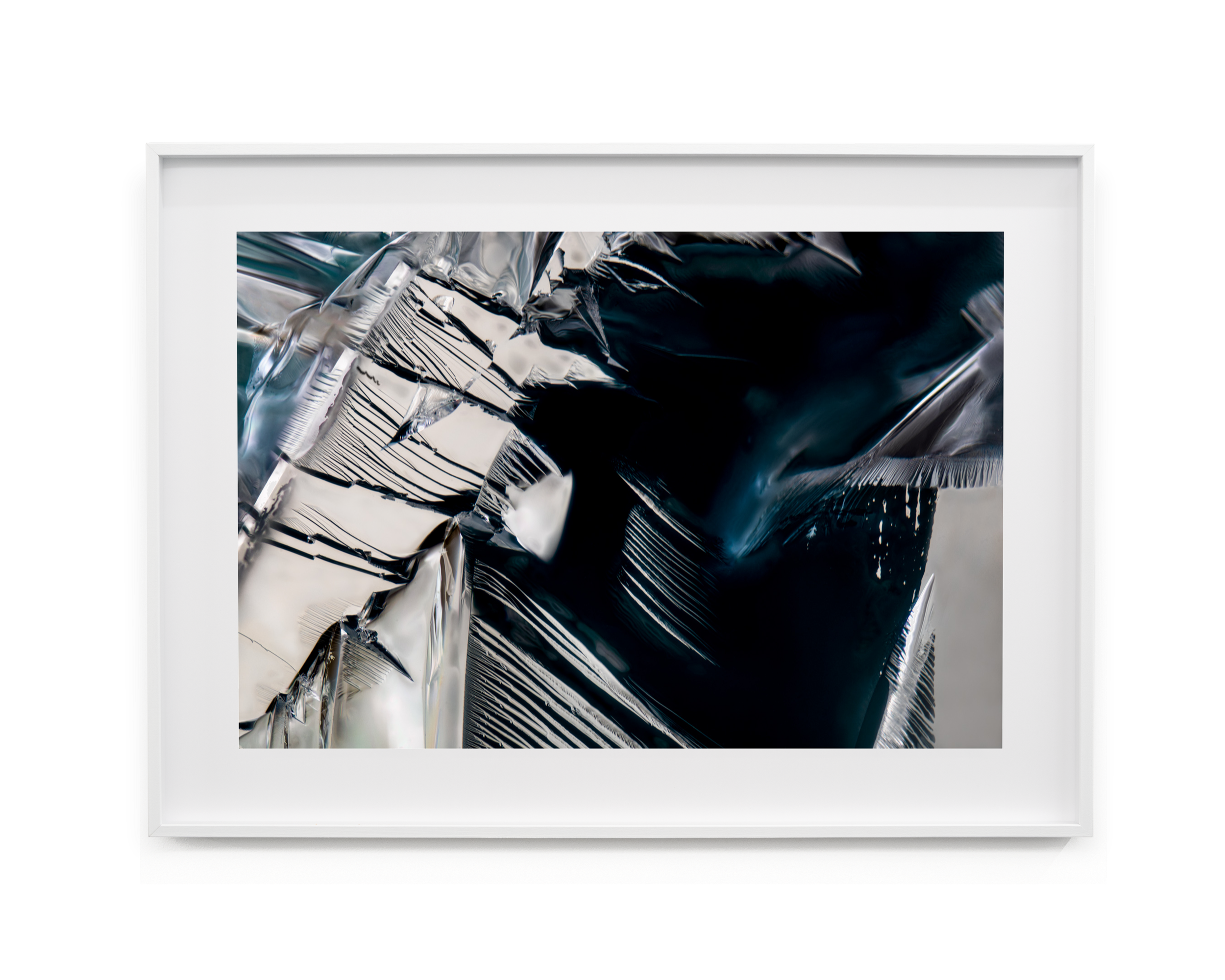
COMPLETE WORKS
The works presented here were selected for HIDDEN LINES at Sevenmarks Gallery, Kiama. Each is accompanied by a short note on what I saw and how its title emerged.
THE COMPLETE WORKS →
CONVERSATION
A conversation about scale, material, photography and the search for what lies beyond the visible.
WHY IS SCALE SO IMPORTANT?
Scale changes my relationship to the subject.
At one scale I can identify what I'm looking at. As I move closer, that certainty begins to disappear. A fracture can become a horizon. A small plane can begin to feel architectural. A void can become a space.
I'm interested in the point where recognition gives way to another kind of looking.
The printed scale completes that shift. Something encountered at a fraction of its original size is enlarged until it occupies the viewer's physical space. What was almost imperceptible can become immersive.
WHERE DID THE INVESTIGATION BEGIN?
The material gave me somewhere to begin.
I was drawn to what it contained: structure, fracture, transparency, colour and the way light moved through it. But fairly quickly, identifying the material became less important.
Once I began working at this scale, I stopped thinking about the object itself and started responding to what I could see within the image: lines, planes, voids, ruptures and unexpected structures.
These details became evidence of processes that had taken place over time: growth, pressure, fracture and change.
The material became a site for exploration rather than the subject of the work
HOW DOES YOUR BACKGROUND IN DESIGN AND JEWELLERY INFORM THE WORK?
My background in design and jewellery has shaped the way I look at things.
Both require close attention to material, structure, proportion and detail. Jewellery in particular has trained me to work at a very small scale, where tiny decisions can completely change how an object is experienced.
That way of looking carried naturally into photography. I began using the camera to examine things more closely, initially as a way of documenting objects, but eventually the act of looking became more interesting than the object itself.
There is also a precision to the process that feels familiar to me. I establish the conditions, control the camera, light and movement, and then respond to what appears.
IS THIS DOCUMENTATION?
It begins with photography, but I’m not trying to make a faithful record of the material.
The camera gives me access to something I can’t experience in the same way with the unaided eye. Focus stacking extends that further, allowing information from different planes of focus to be assembled into a single image.
What I’m recording is real. The lines, fractures, planes and interruptions are evidence of structures and processes that already exist within the material.
But the way that evidence is revealed is shaped by the decisions I make: where I look, how I light it, what I bring into focus, what I leave out and ultimately how I present it.
So the photograph begins as evidence, but becomes an interpretation.
WHEN DO YOU KNOW AN IMAGE IS FINISHED?
It’s an iterative process.
I might capture a thousand frames from a single setup, but those frames aren’t necessarily the final image. They give me material to work with.
I’ll test different combinations, sometimes stacking 50 or 100 frames, sometimes several hundred. Each stack can produce a different result, revealing or suppressing different structures within the image.
I’ll return to the material, change the light, shift the camera, capture more frames and stack again.
Eventually something holds my attention and I stop searching.
It’s less about completing an image than recognising when I’ve found one.
WHY HIDDEN LINES?
The title came quite late.
I kept returning to structures that were already present but difficult to see: fractures, inclusions, growth lines, edges and internal divisions that only became apparent through changes in scale and light.
HIDDEN LINES also connects back to architectural drawing. A hidden line describes something that exists within a structure but cannot be seen directly from a particular view. That felt very close to what I was doing with the camera.
I wasn’t inventing these structures. I was looking for them, changing the conditions until something previously concealed became visible.
The title shifted the emphasis away from what the material is and towards what it might reveal.