
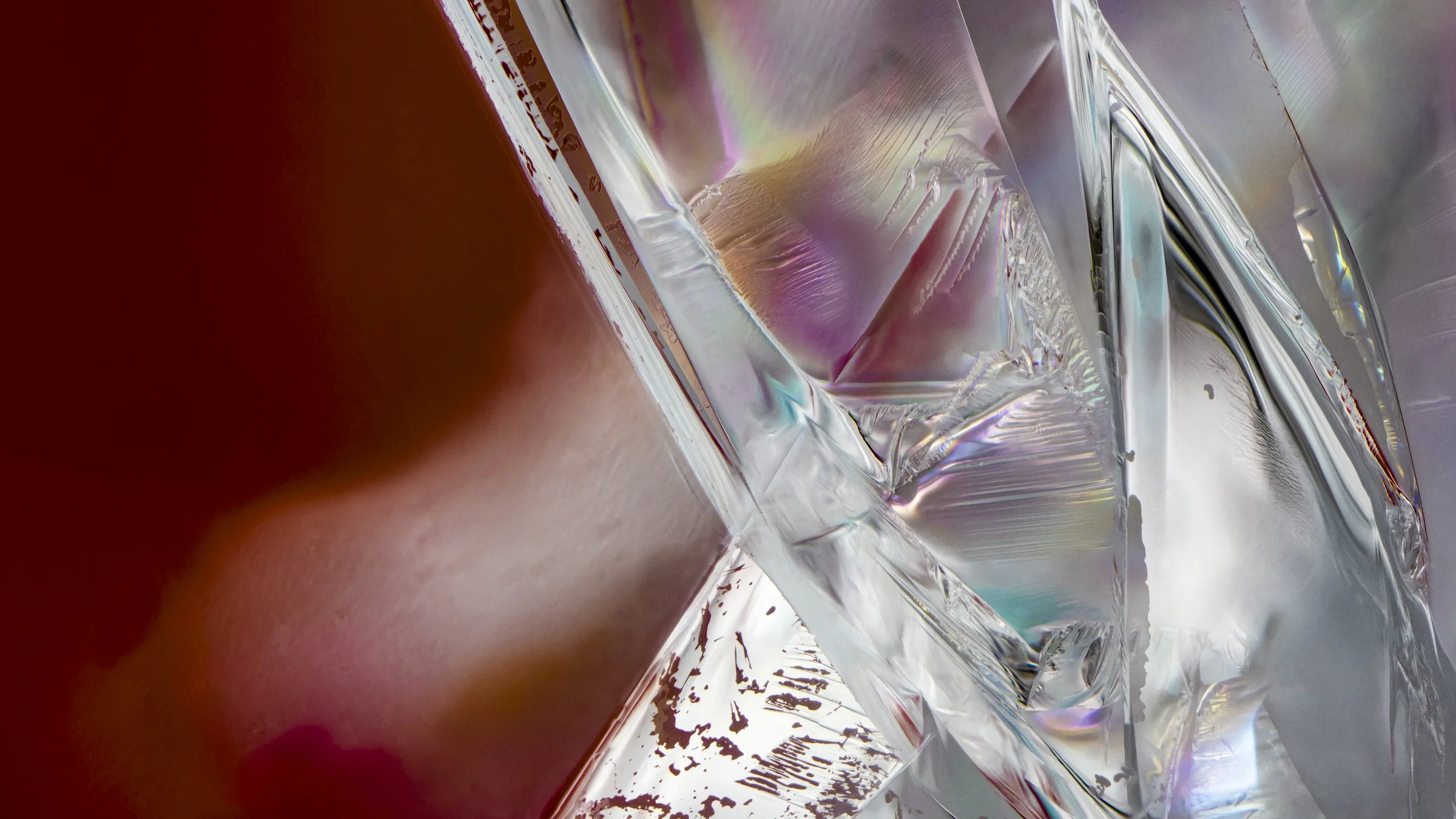
HIDDEN LINES
CESAR CUEVA
SEVENMARKS GALLERY
17 OCTOBER TO 22 NOVEMBER 2026
HIDDEN LINES begins with a shift in scale.
What am I looking at?
HIDDEN LINES
HIDDEN LINES begins with a shift in scale.
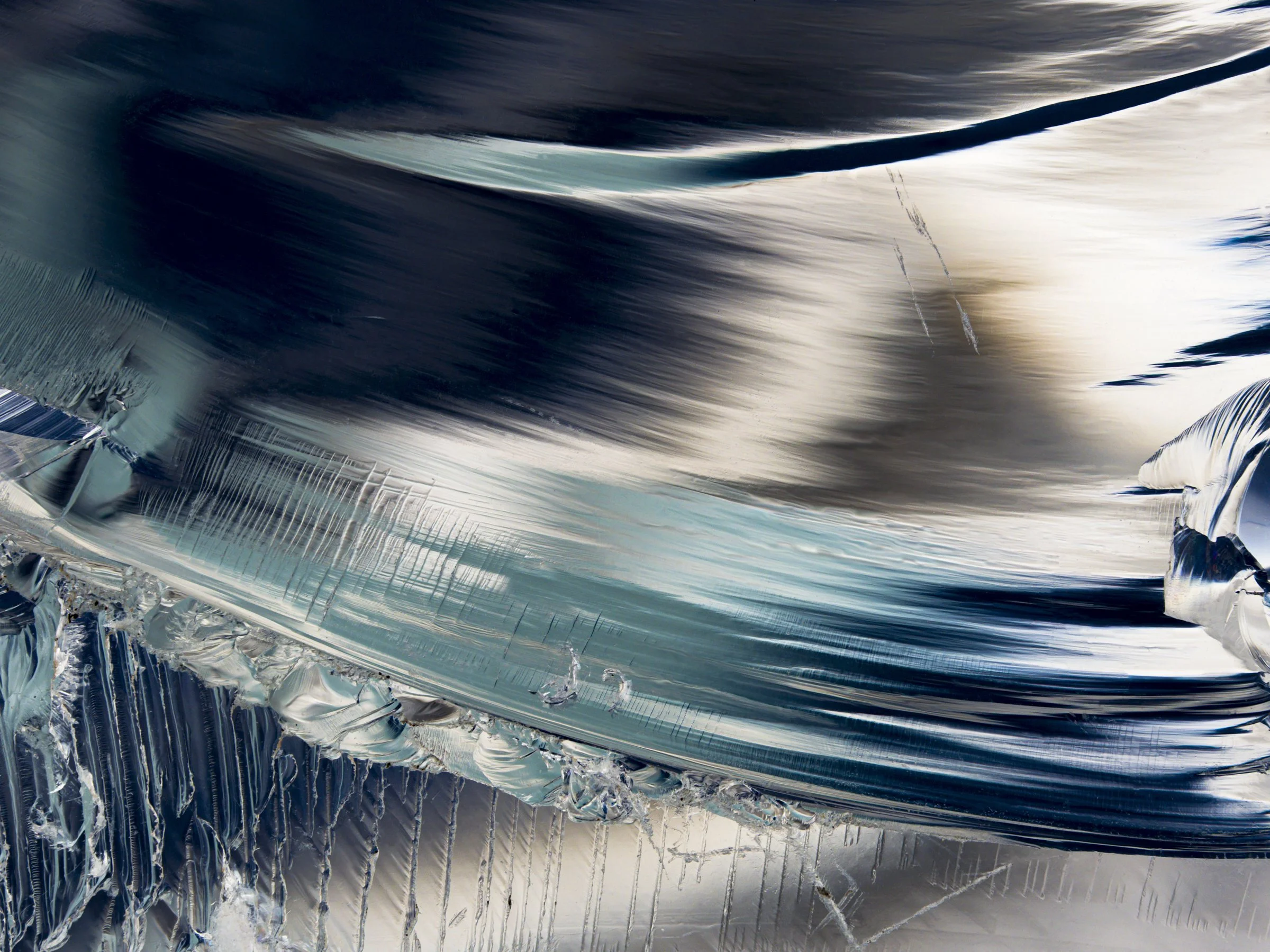
Working through extreme macro photography and focus stacking, Cesar Cueva uses the camera to move beyond the immediately visible and excavate structures held within light altering material.
Fractures, inclusions and growth lines become points of entry. As scale shifts, familiar references begin to fall away. Line, plane, colour, light and void take over. Forms emerge that can appear architectural, geological or entirely unfamiliar.
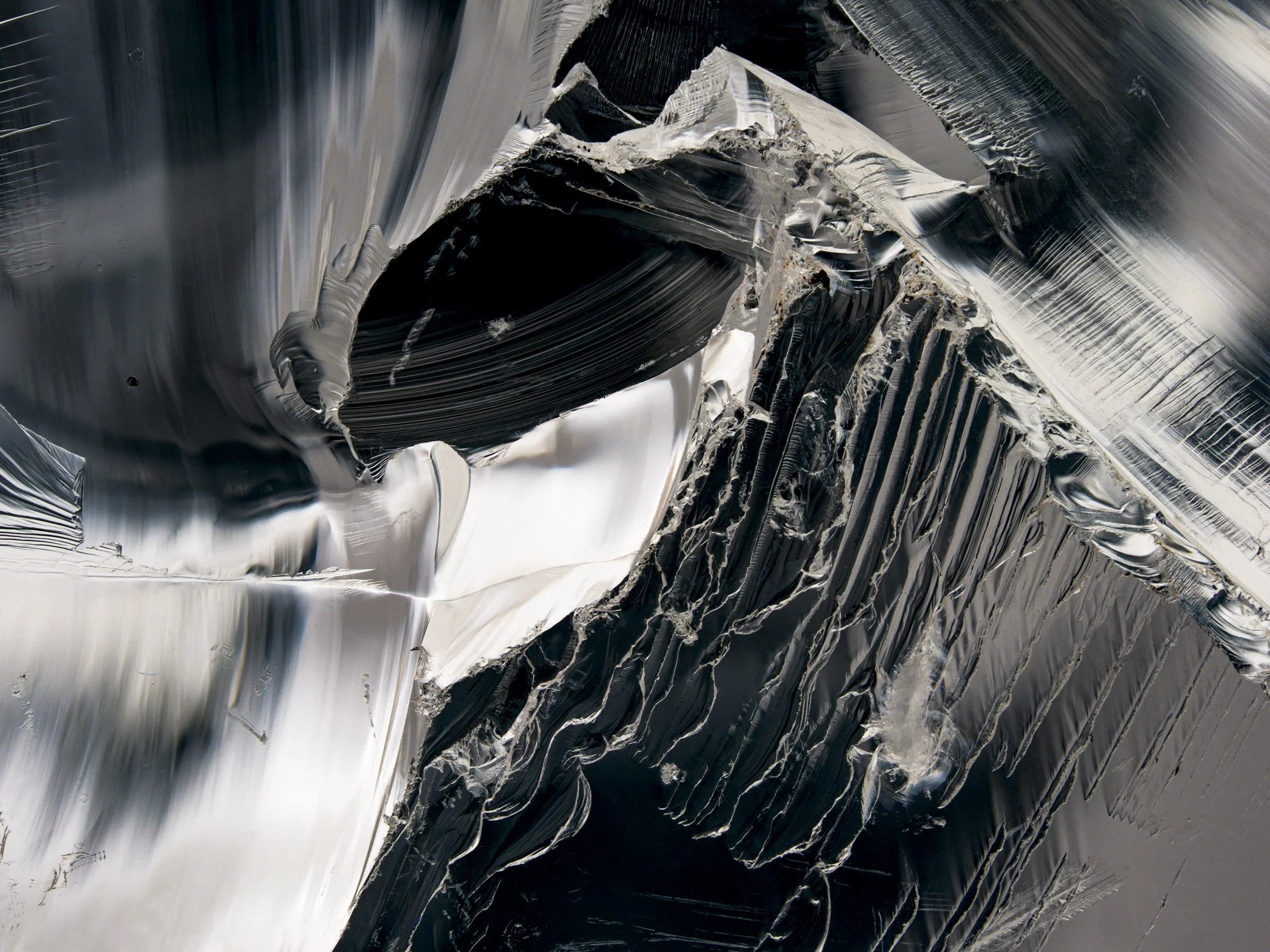
The process is both controlled and exploratory. Thousands of individual frames are captured and assembled to extend what the camera can hold in focus. Colour is introduced in response to each scene. The camera moves, light changes and compositions are discovered rather than predetermined.
Rather than documenting a subject, Cueva creates the conditions for observation, chance and discovery. Scale becomes a way of entering the material, allowing the camera to move through what might otherwise remain unseen.
HIDDEN LINES asks what becomes visible when we stop looking at what something is and begin looking at how it is constructed.
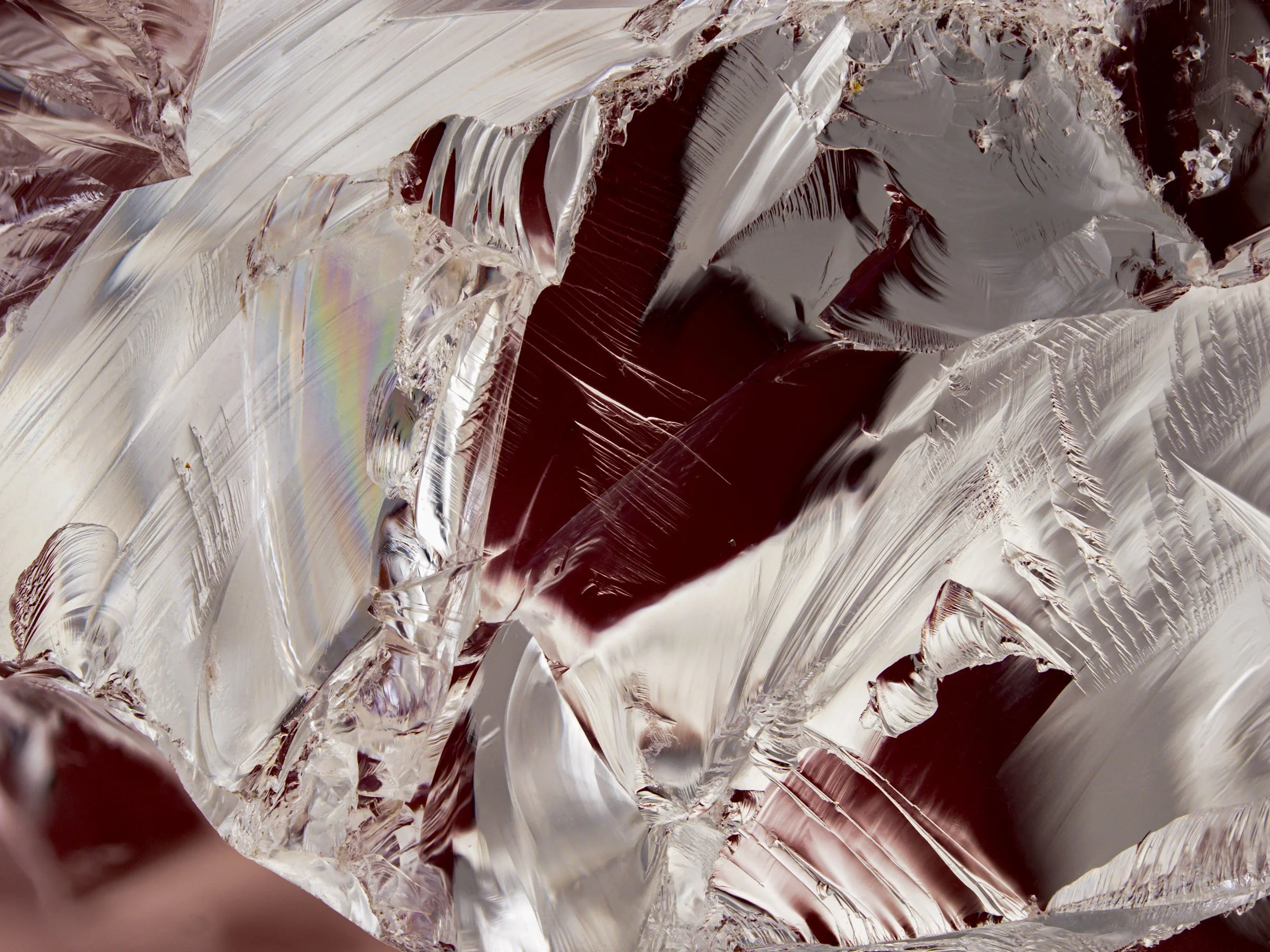
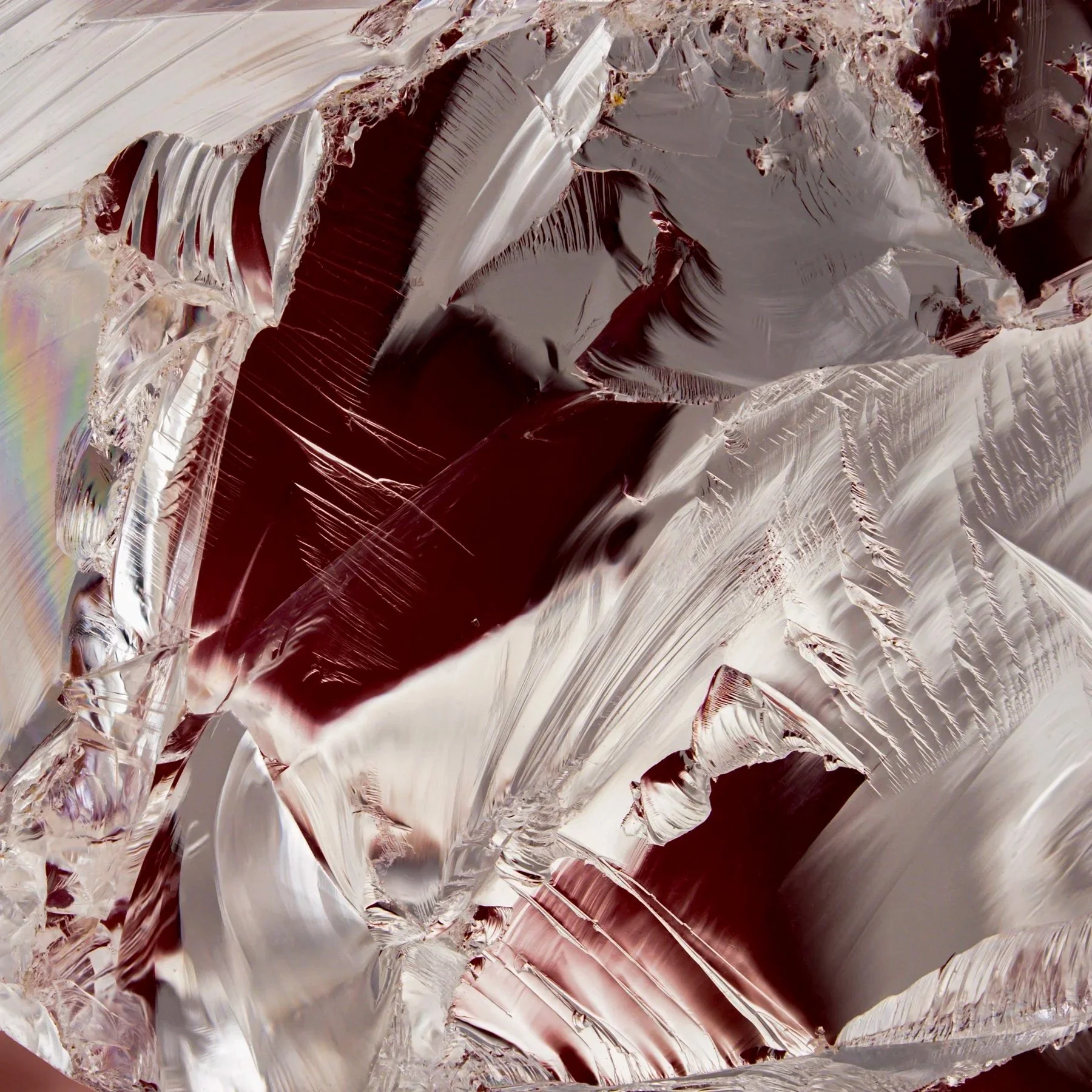
Scale changes what is visible.
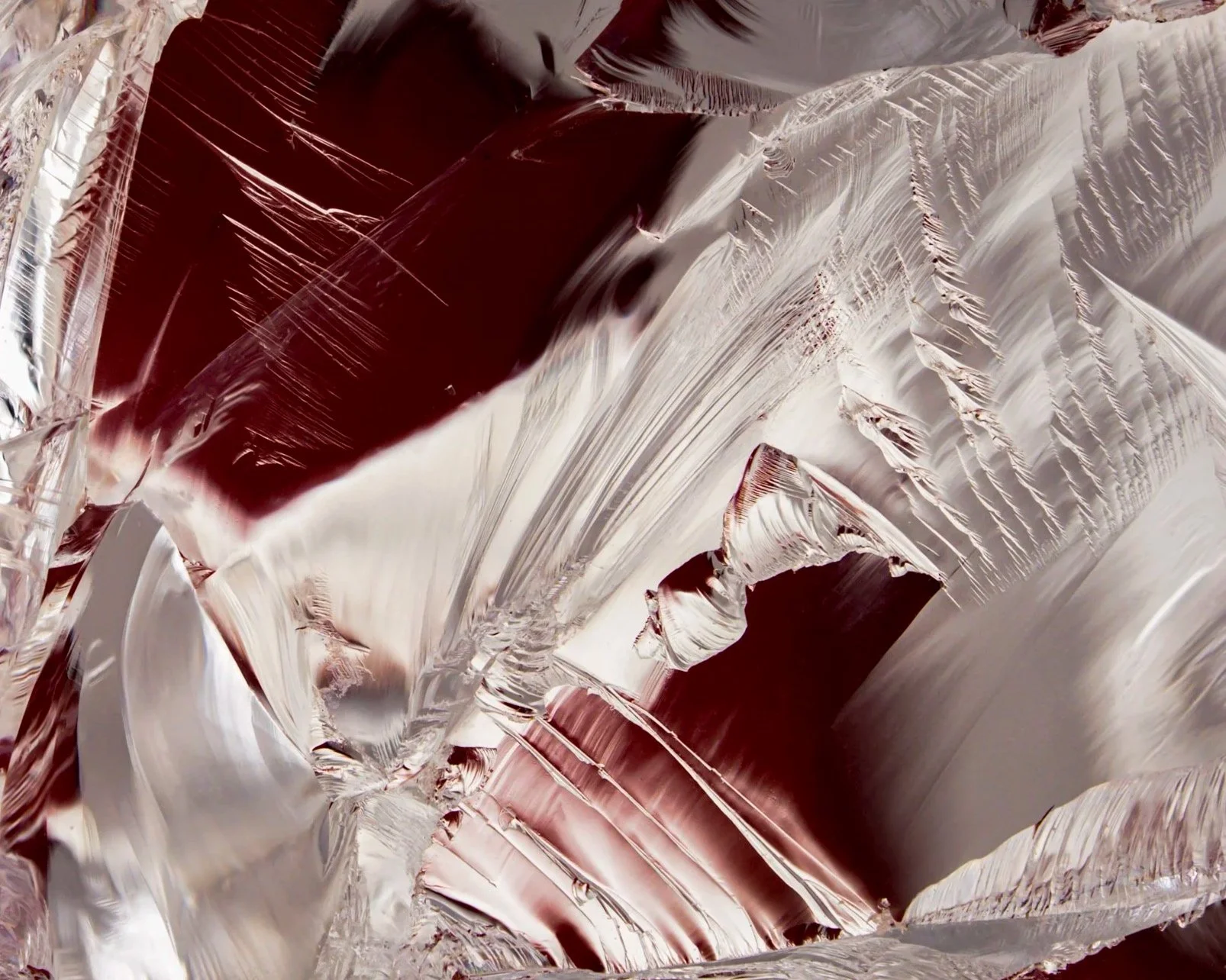
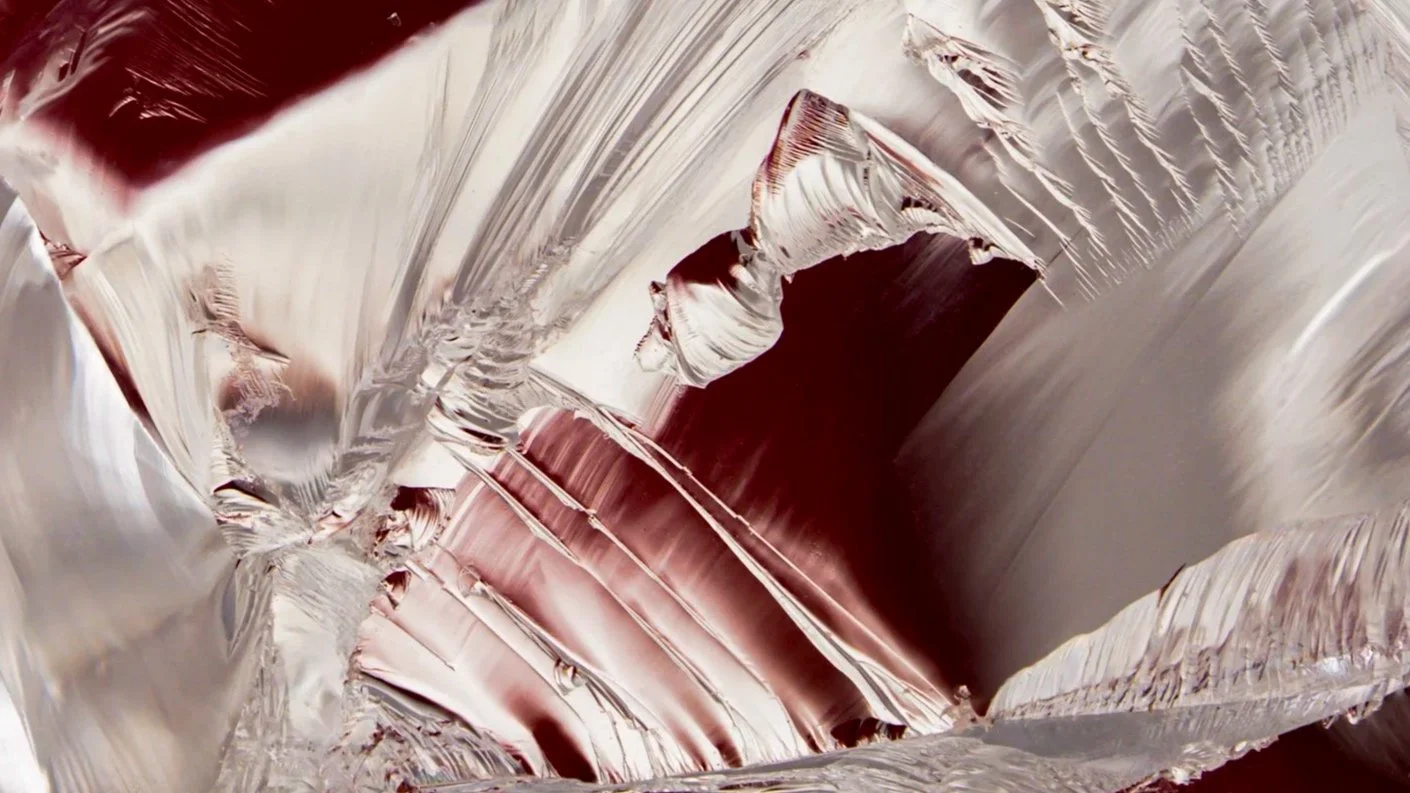
At one scale I recognise the thing. At another, recognition begins to fall away. I start looking instead for line, plane, fracture, colour, light and void.
EXCAVATION
Excavation is the search for what lies beyond the immediately visible.
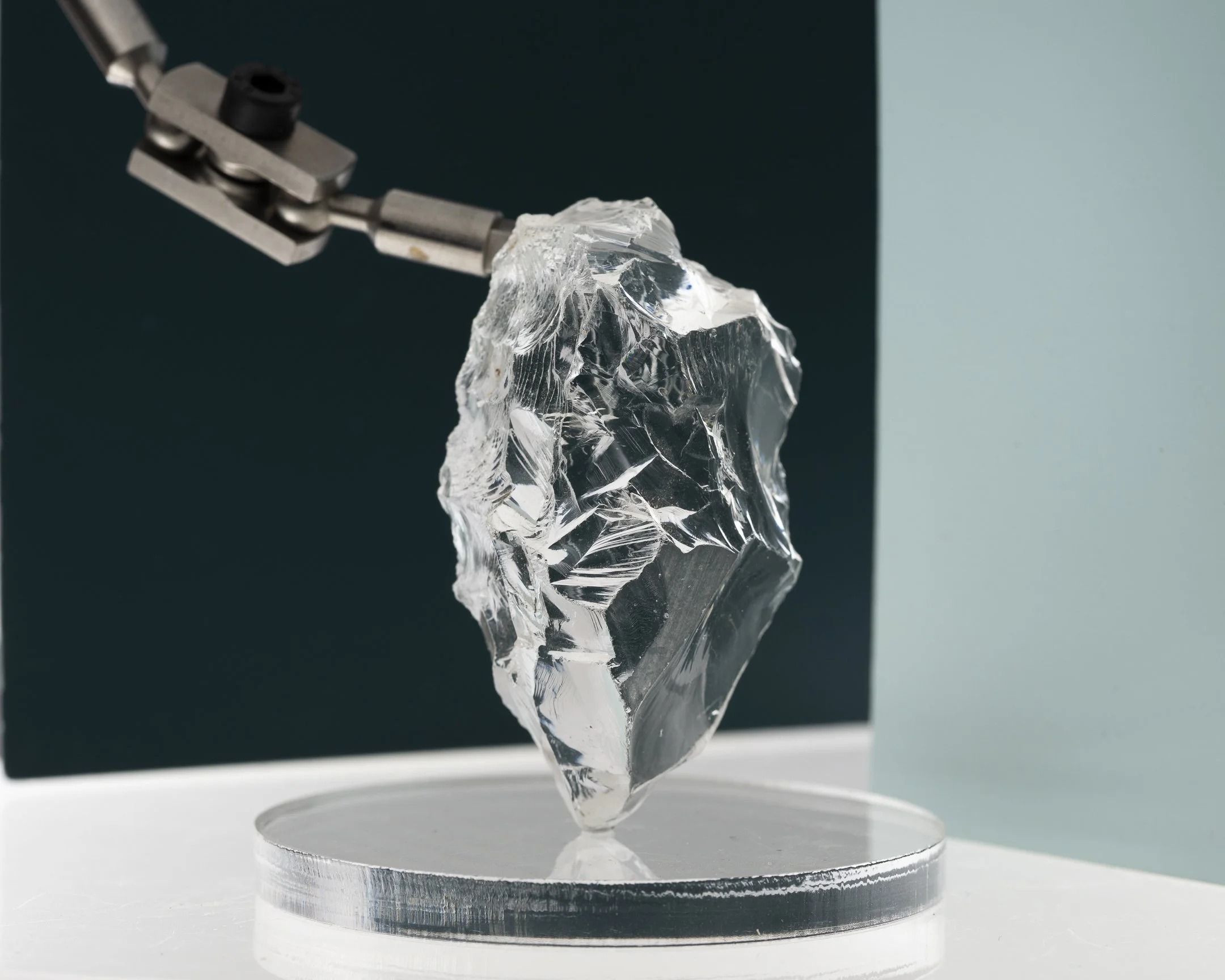
SETUP
The material, camera, light and colour are positioned to create the conditions for observation.
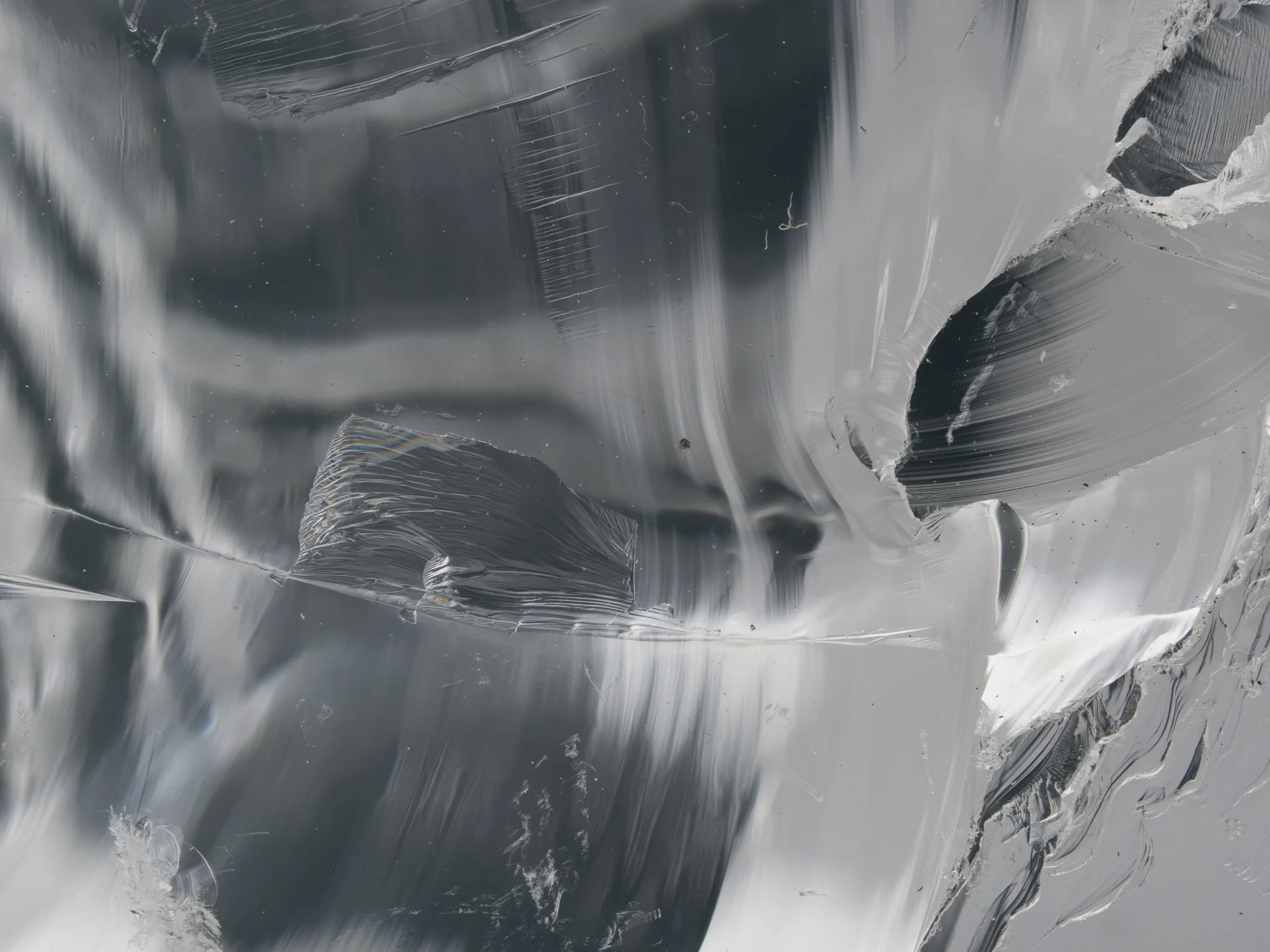
FOCAL POINT
At this magnification, only a narrow plane can be held in focus at any one time.
01/ SELECTION
Each frame shifts the point of focus slightly deeper through the material. What appears almost unchanged from one image to the next becomes a sequence of successive planes of focus.
02/ FOCUS STACK
The successive planes are analysed and combined into a single image, extending focus through a depth that cannot be captured in one exposure.
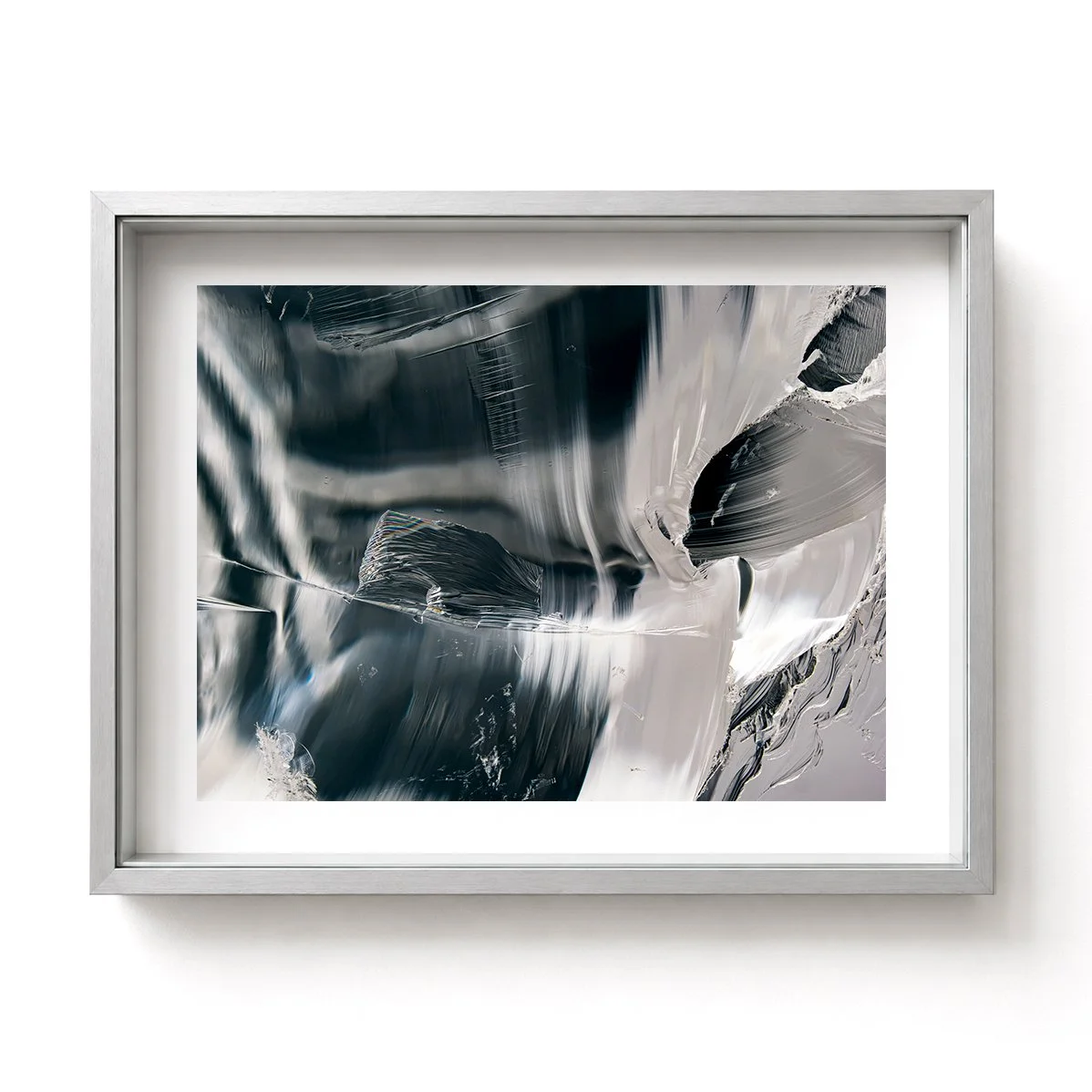
THE FINISHED WORK
The assembled image becomes a physical object, returning scale to the experience.
I began focus stacking as a practical way of photographing jewellery. At this scale, depth of field becomes extremely shallow, so I make a sequence of images at different points of focus and assemble them into a single image.
Over time, the technique became something else. Moving through those frames began to feel less like documenting an object and more like searching through it.
What am I looking at?
CONDITIONS
Conditions determine what can be revealed.
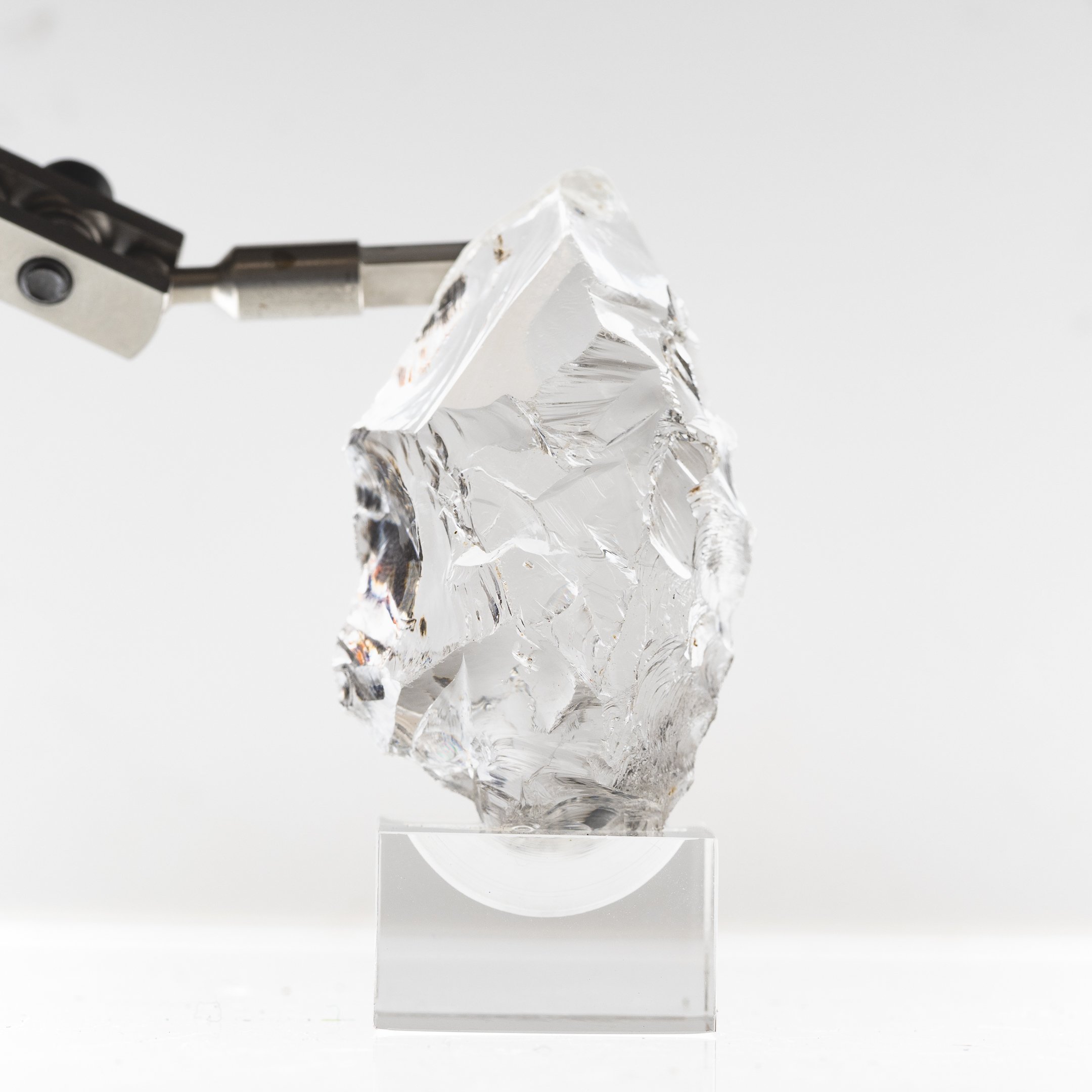
LIGHT
I position the light to reveal different structures within the material. Small changes in angle determine which fractures illuminate, which planes reflect and which recede from view.
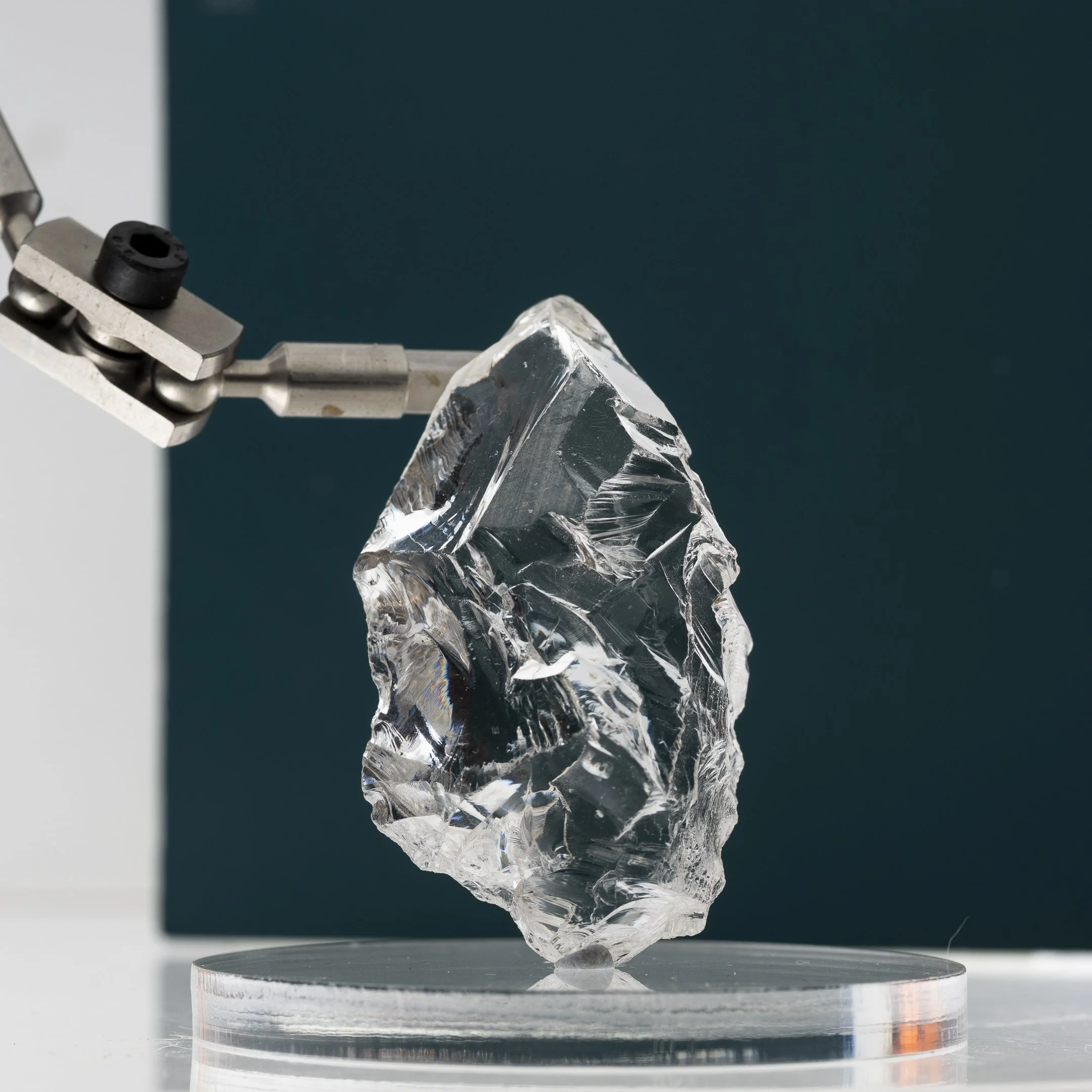
COLOUR
I introduce coloured fields around the material and observe how they move through it. Reflection and refraction carry colour into different planes, revealing edges and structures that were previously difficult to see.
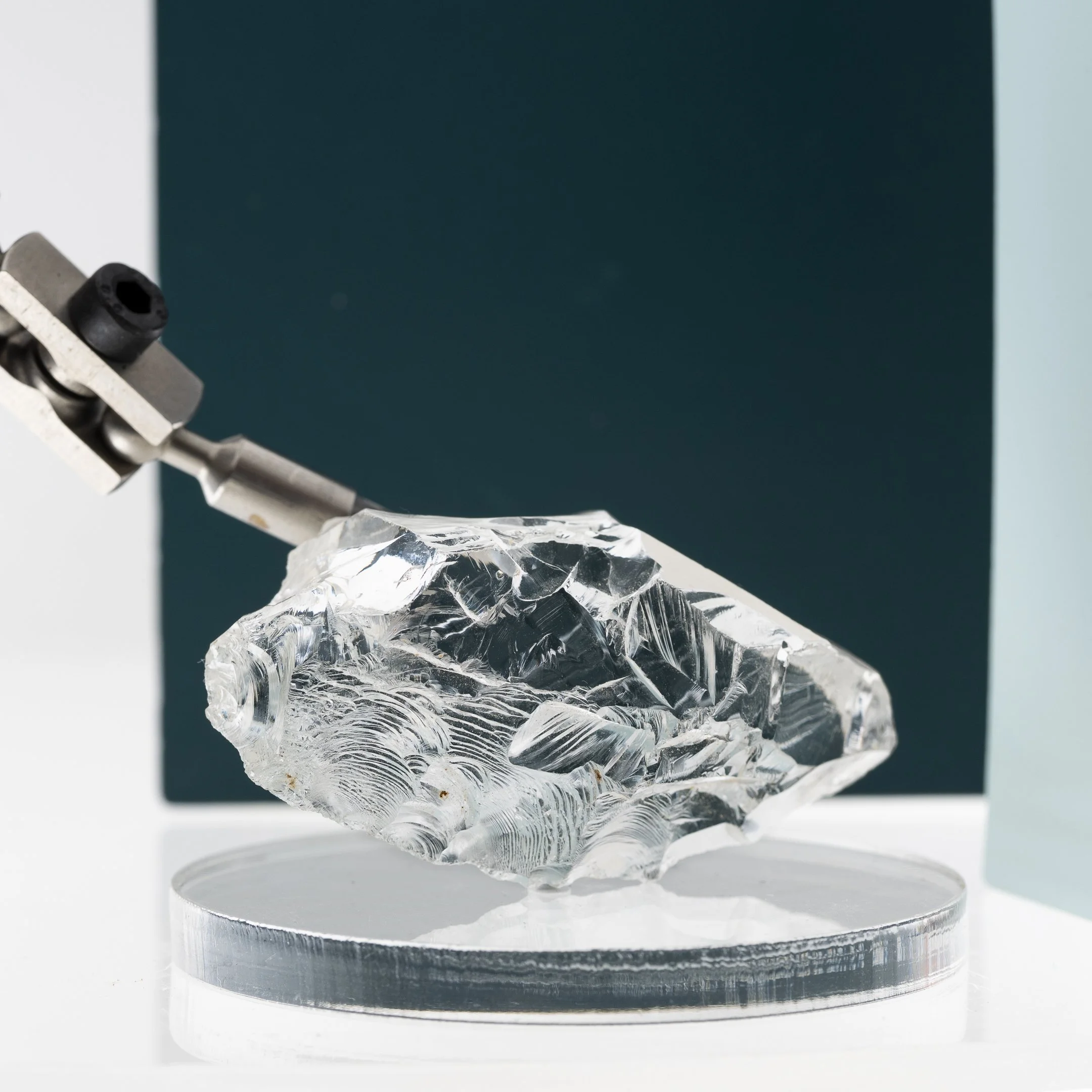
POSITION
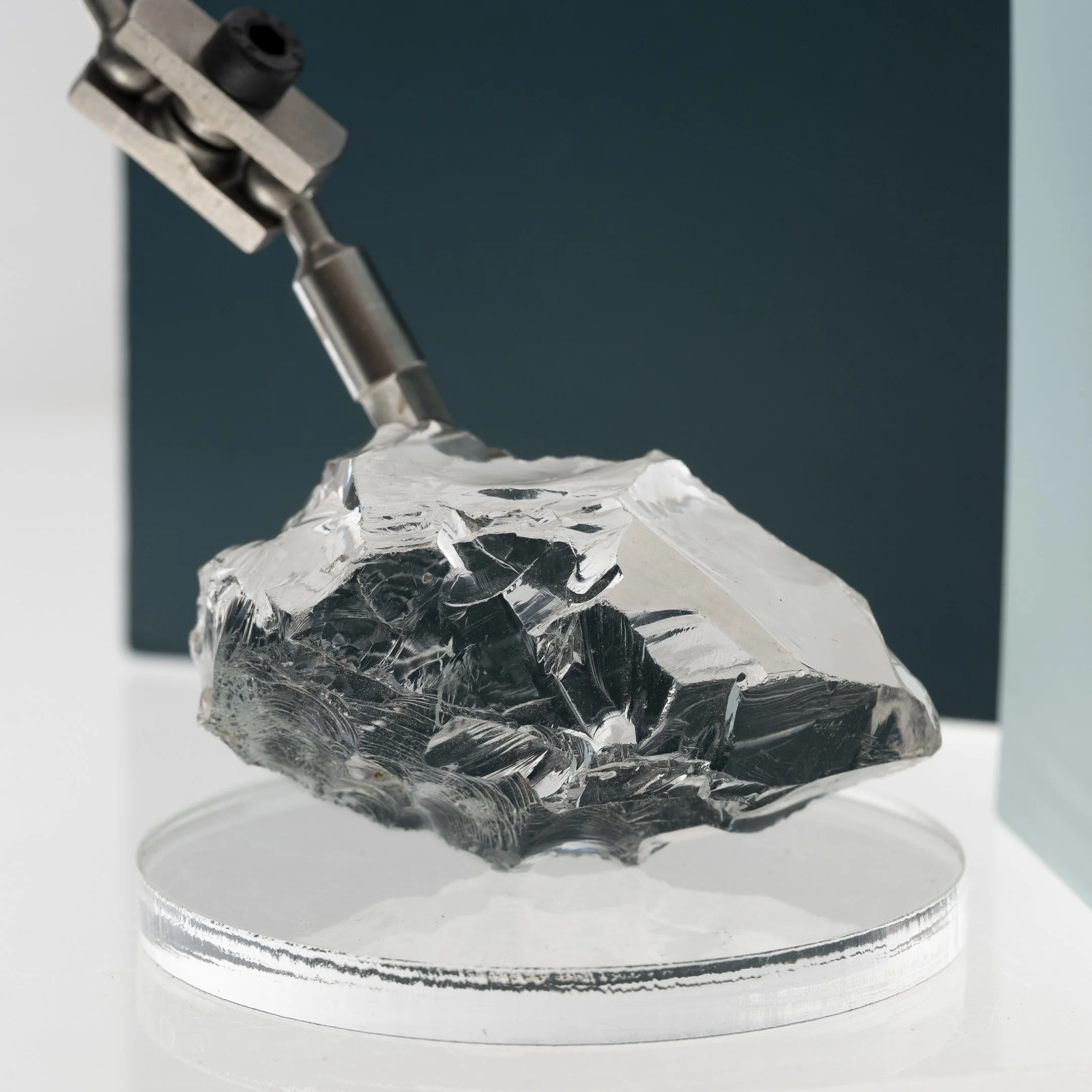
I rotate and tilt the material in small increments, watching as different fractures and planes come into view. A small change in position can completely reorganise the image.
CHANCE
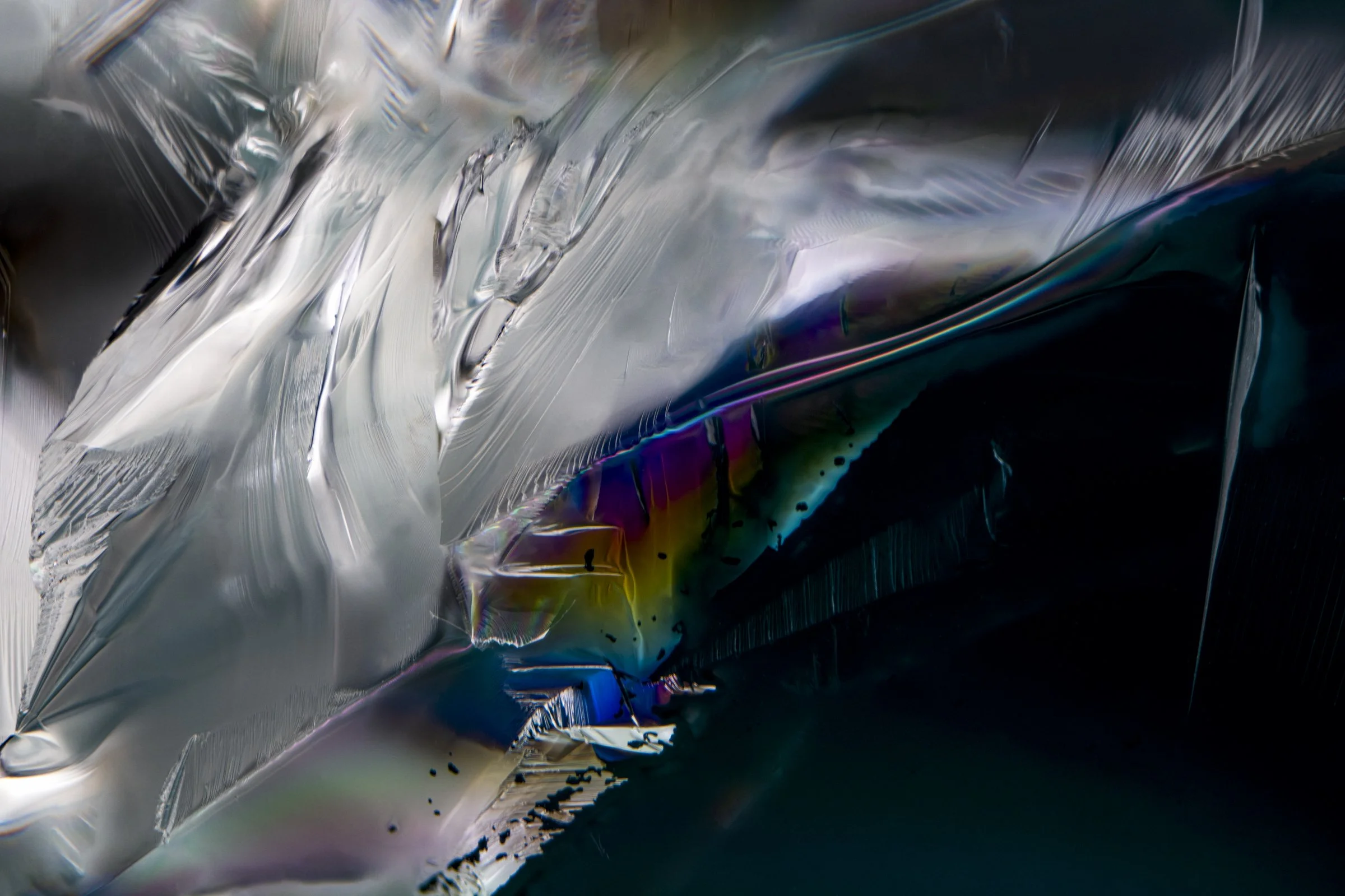
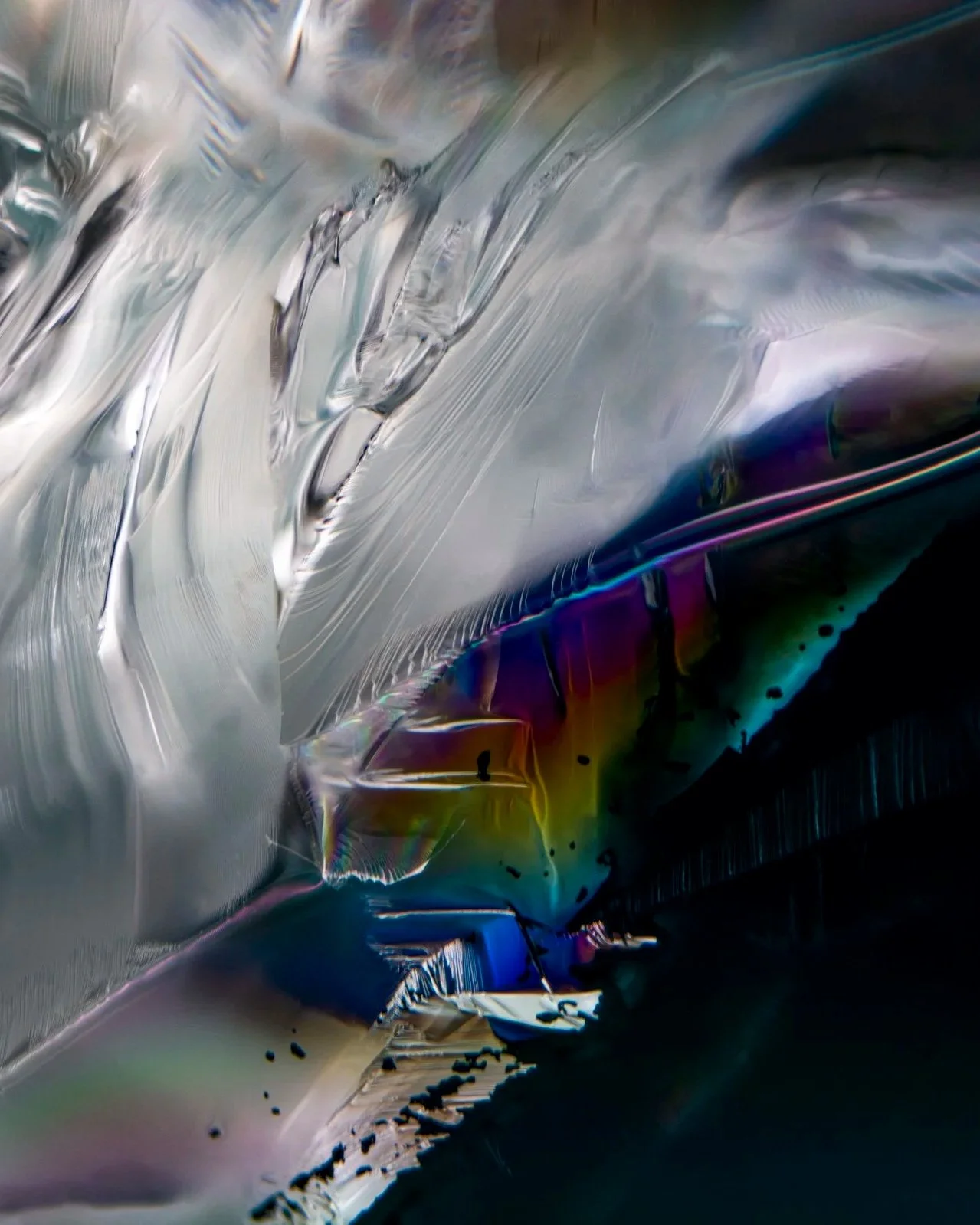
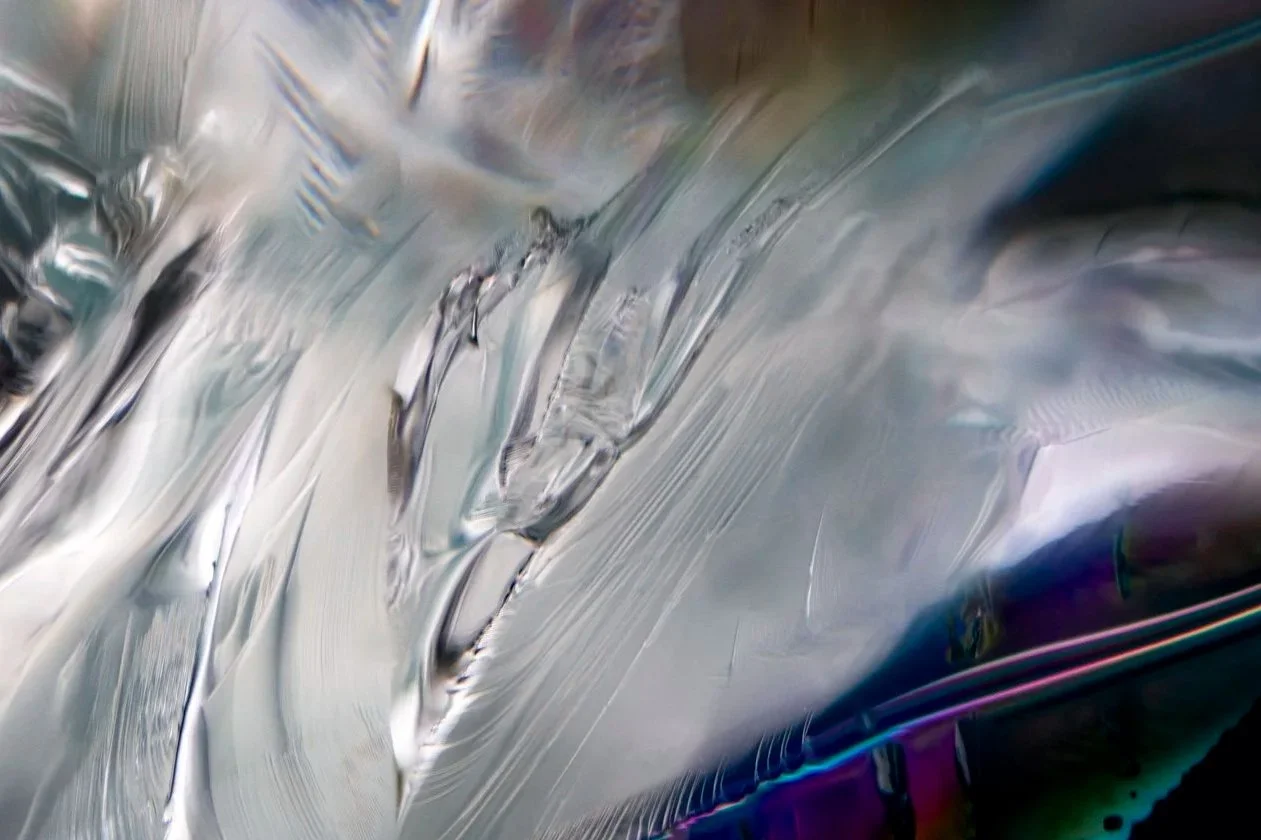
A small shift in position changed the image completely. The central fracture caught the light, colour appeared at its edge and the vertical structure behind it emerged. None of these relationships were planned.
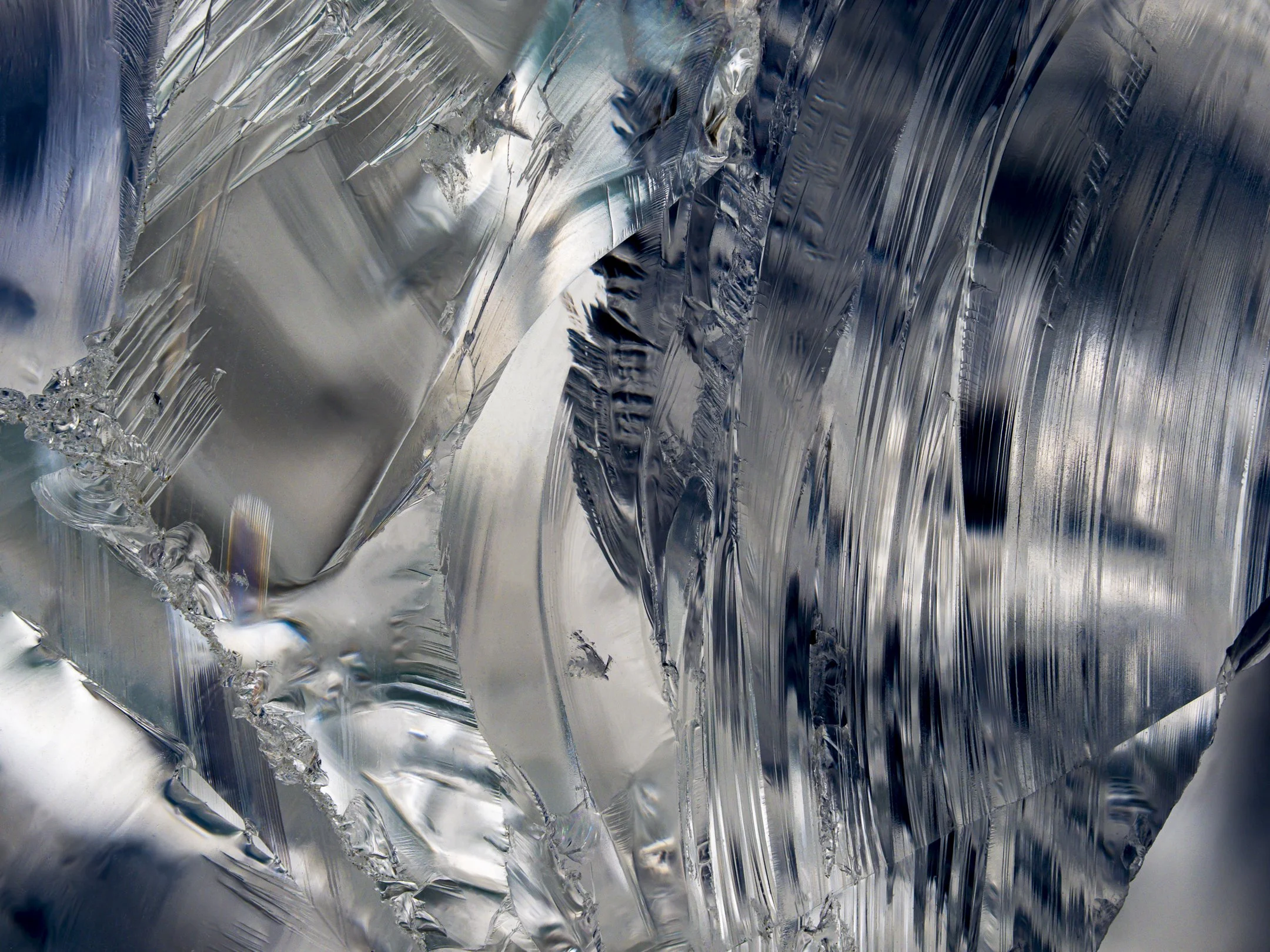
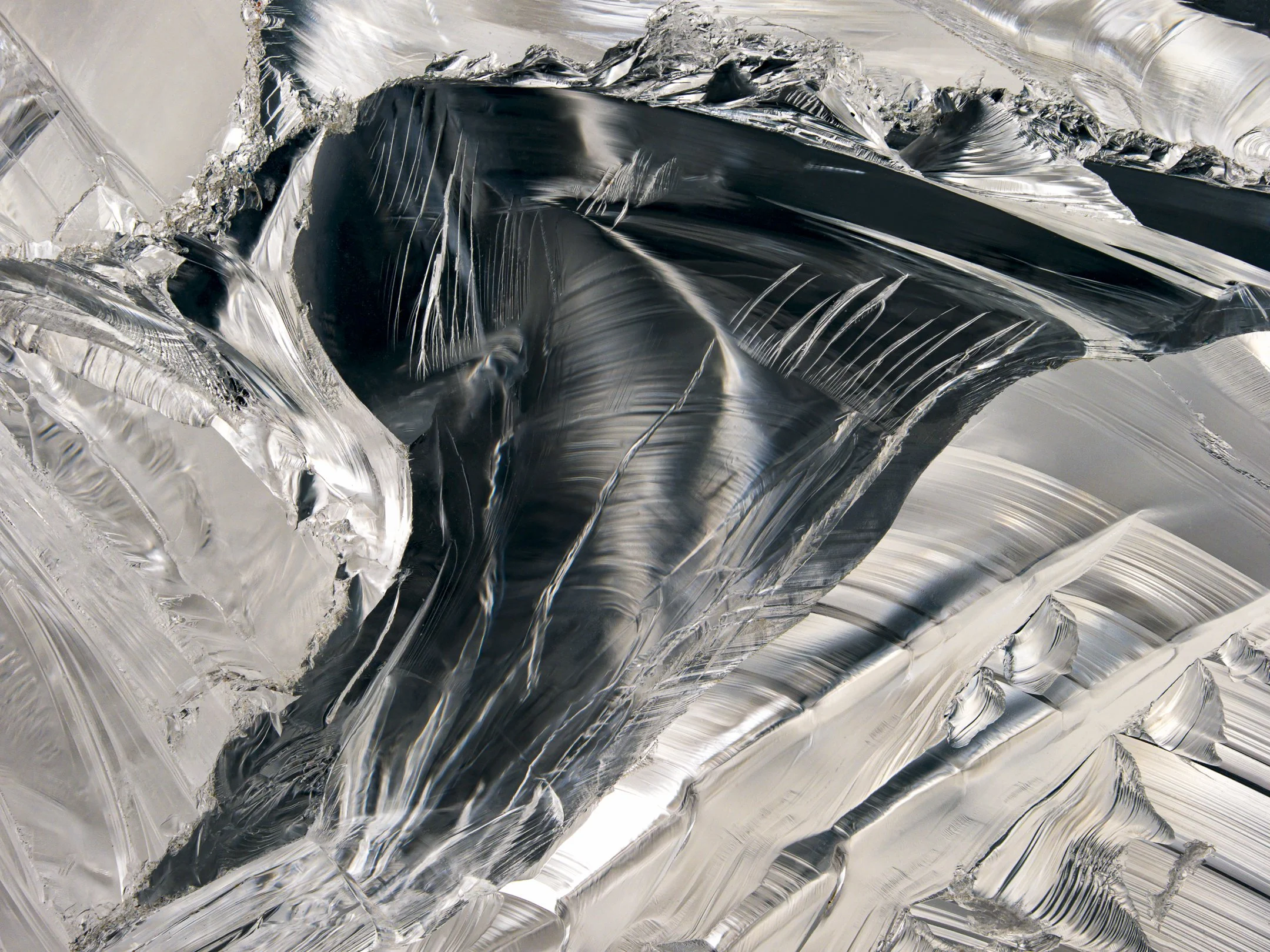
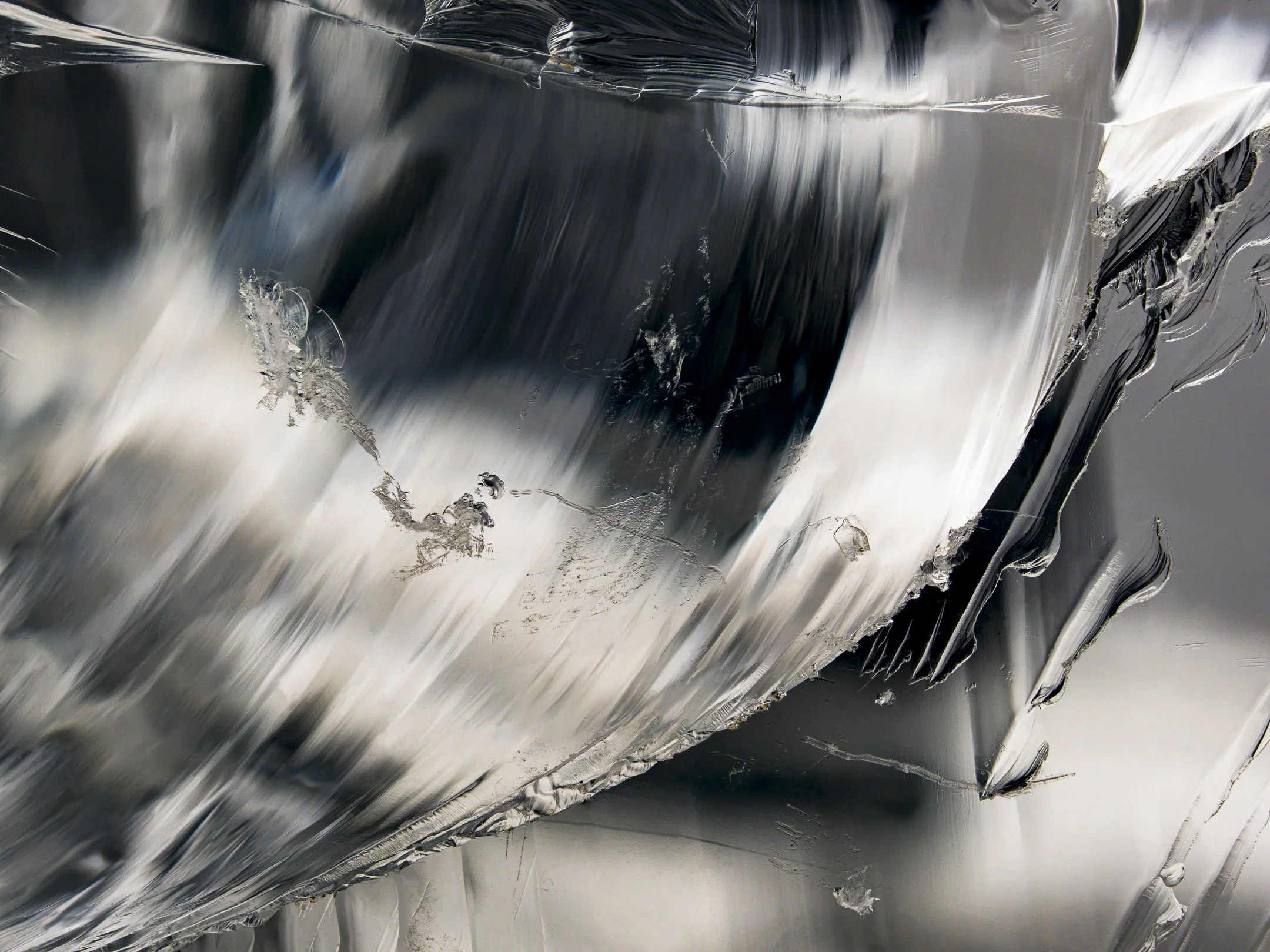
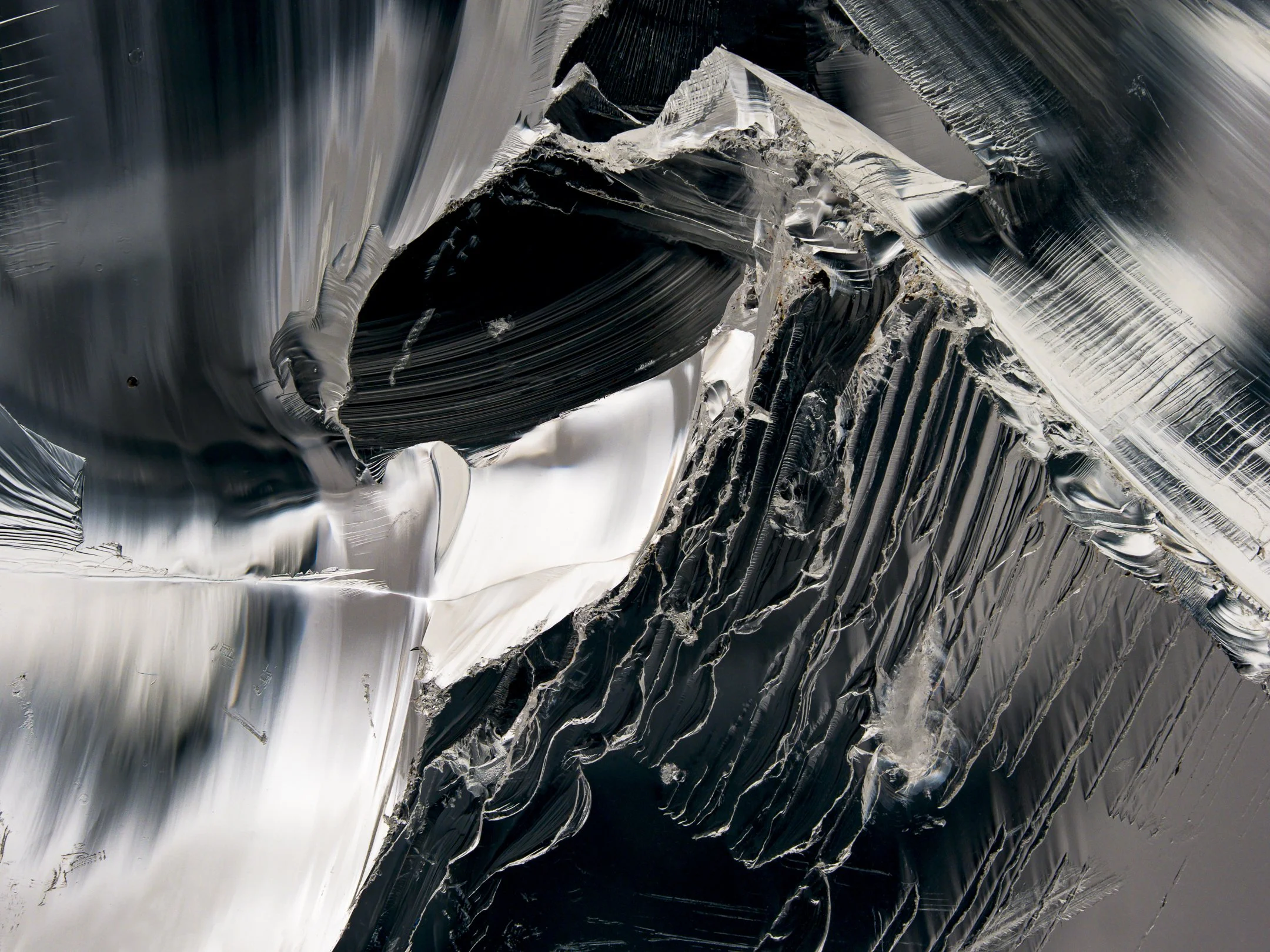
SELECTION
These images are all made from the same subject. Small shifts in position reveal entirely different structures, as lines, planes, light and void continually reorganise. Selection begins when one of those relationships holds together as an image.
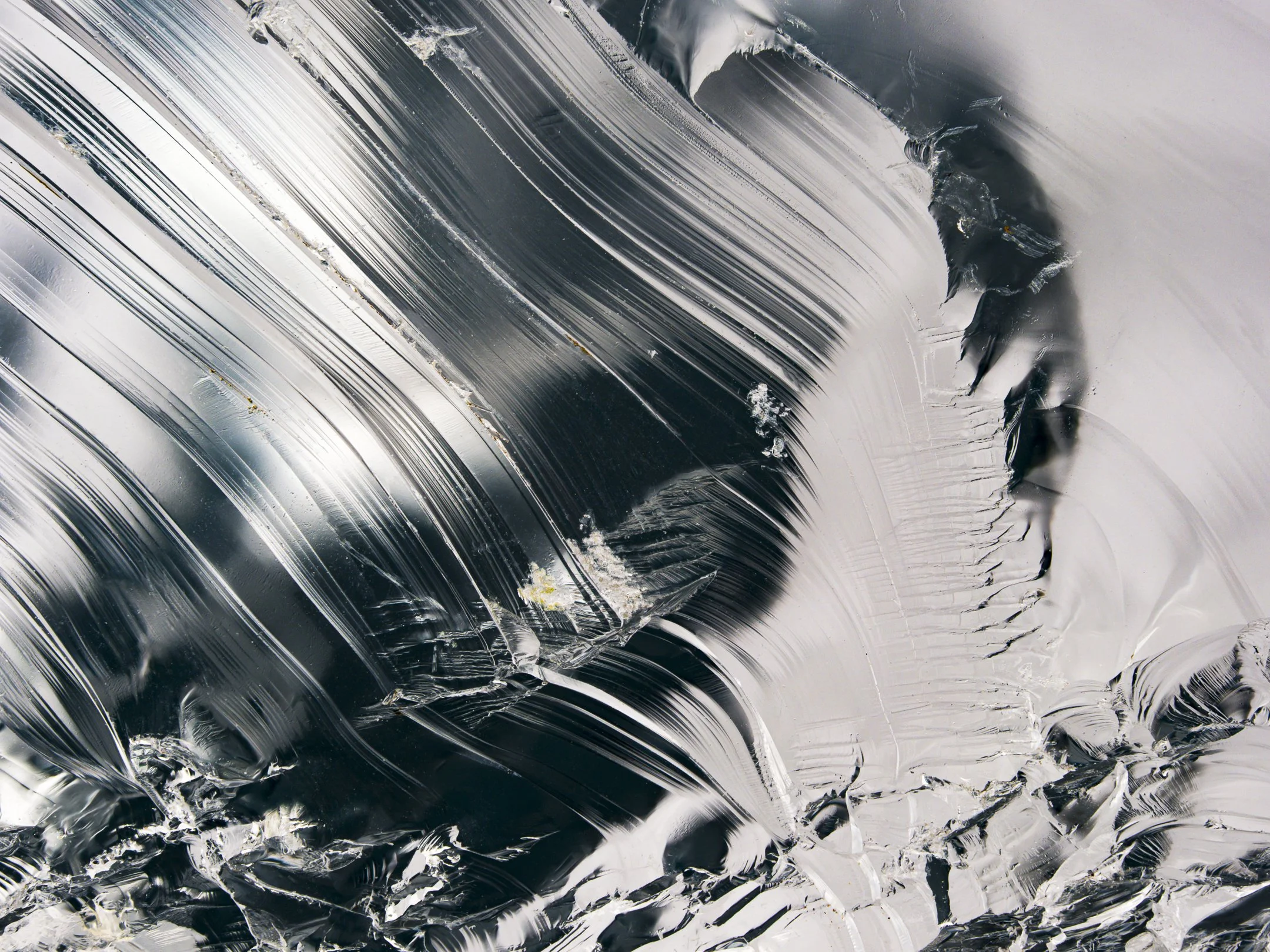
“Order is the condition you create so that disorder becomes legible.”
SELECTED WORKS
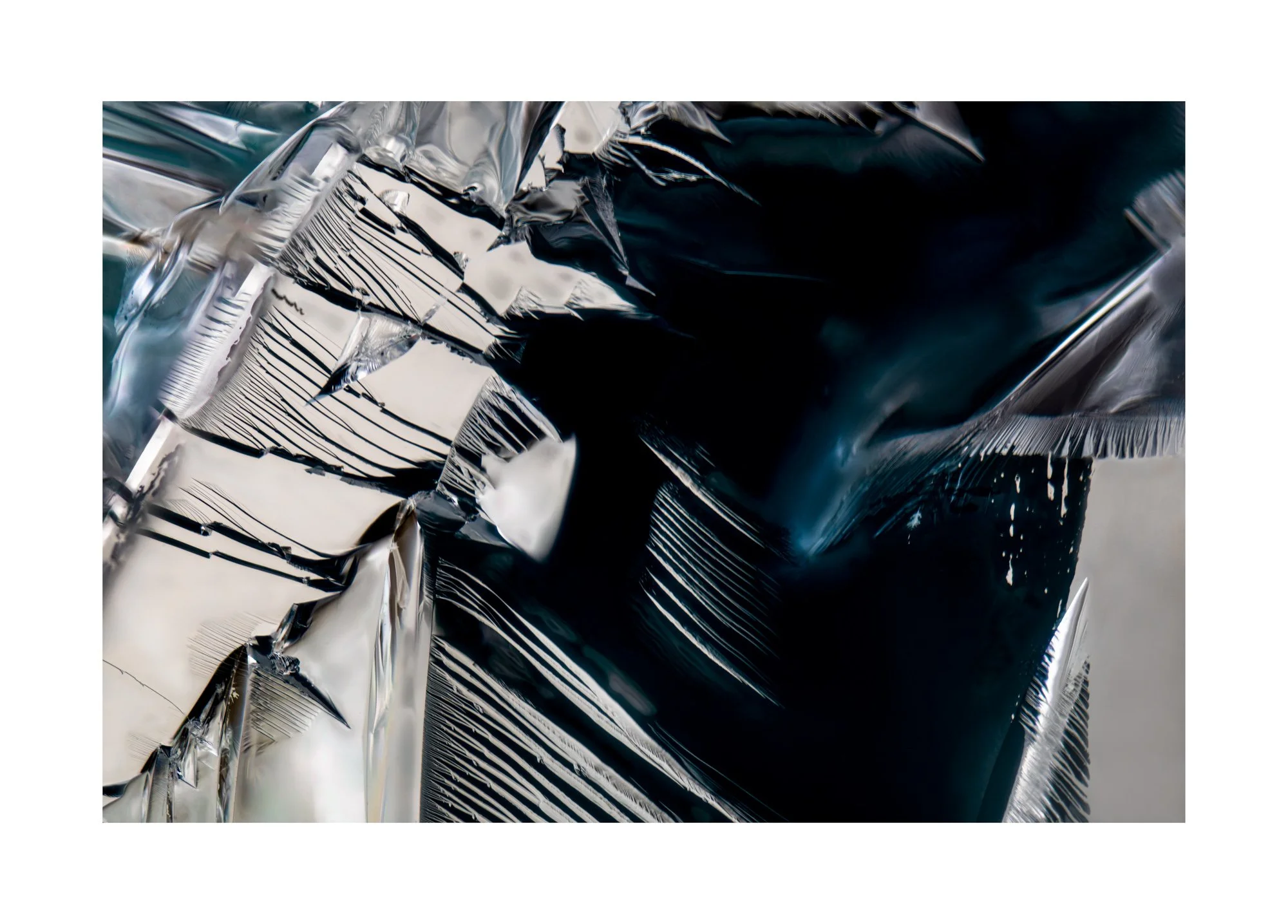
FIELD COMPRESSION 2026
I saw compression immediately. The planes seemed crushed together under pressure, recalling the compressed sculptures of César and John Chamberlain. It made me wonder whether I was projecting that sensation onto the image, or looking at evidence of forces the material had actually undergone.
I introduced a darker, denser palette to amplify that sense of weight, then watched as the colour moved through the different planes.
FIELD COMPRESSION came from that question.
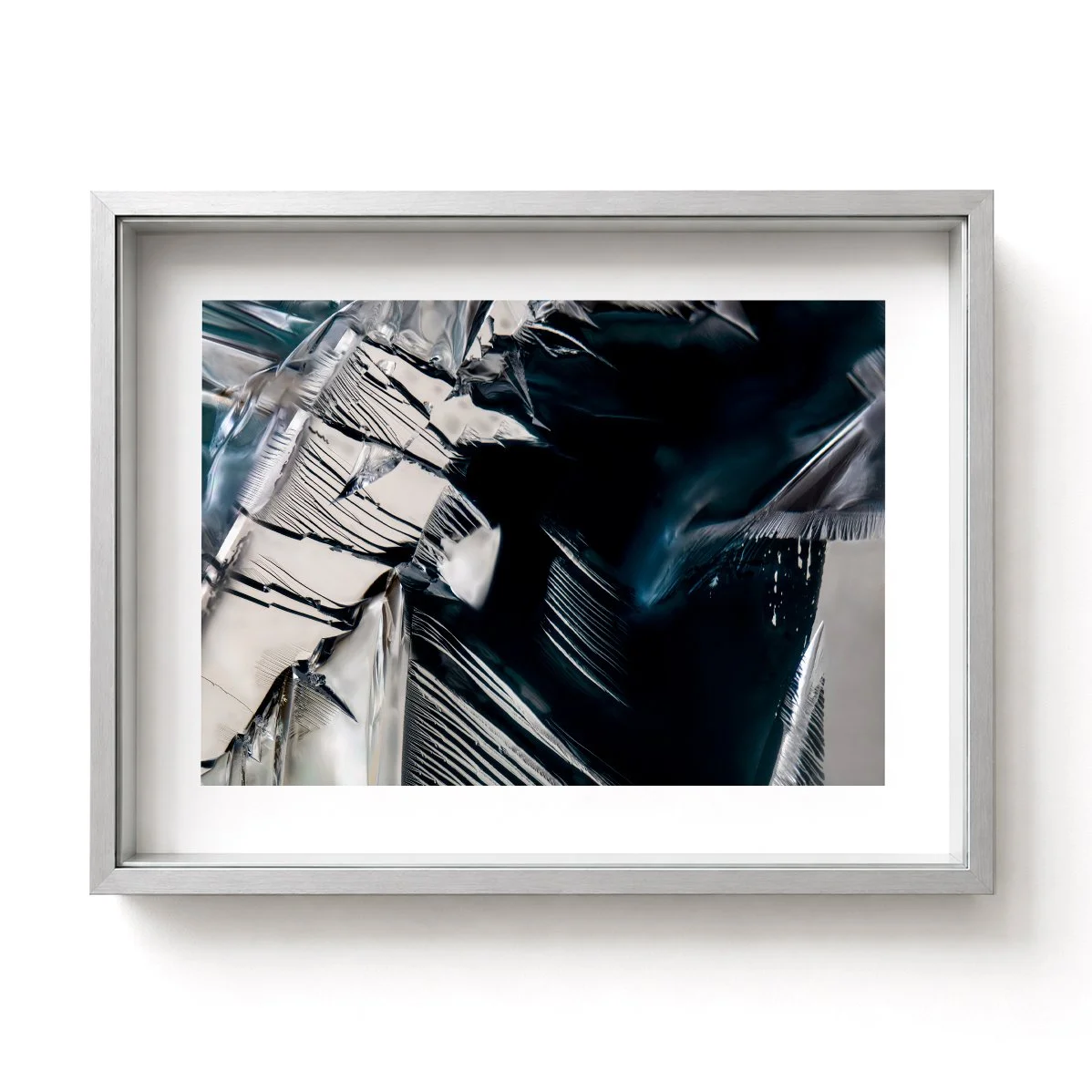
COMPLETE WORKS REVEALED 17 OCTOBER 2026
CONVERSATION
A conversation about scale, material, photography and the search for what lies beyond the visible.
WHY CRYSTAL?
Crystal gave me somewhere to begin.
I was drawn to it because it already contained many of the things I was interested in looking for: structure, fracture, transparency, colour and the way light moves through material.
But fairly quickly, identifying the material became less important.. Once I began working at this scale, I stopped thinking about the object as a specimen and started responding to what I was seeing inside the image: lines, planes, voids, ruptures and unexpected structures.
In that sense, crystal became a site for exploration rather than the subject of the work.
WHAT ARE YOU LOOKING FOR?
I don't always know.
That's an important part of the process. I can choose the material, position the camera, introduce colour and control the light, but I don't begin with a finished image in mind.
I create the conditions and then I look.
I'm watching for a line, a fracture, a shift in colour or a relationship between forms that changes the way I understand the space in front of me. Sometimes it's very small. Sometimes moving the camera a few millimetres completely reorganises the image.
The moment I'm looking for is when something I hadn't anticipated begins to reveal itself.
HOW MUCH OF THE IMAGE IS CONTROLLED?
There is a lot of control at the beginning.
I choose the material, the position of the camera, the light, the colour and the scale. Focus stacking itself is highly methodical. There needs to be enough order for me to work within.
But once I start looking, I try not to control the outcome too tightly. Light behaves unexpectedly. Reflections appear. A fracture catches colour differently. Moving the camera slightly can open an entirely different space.
I'm interested in that point where control gives way to discovery.
I create the conditions, but I don't prescribe what they reveal.
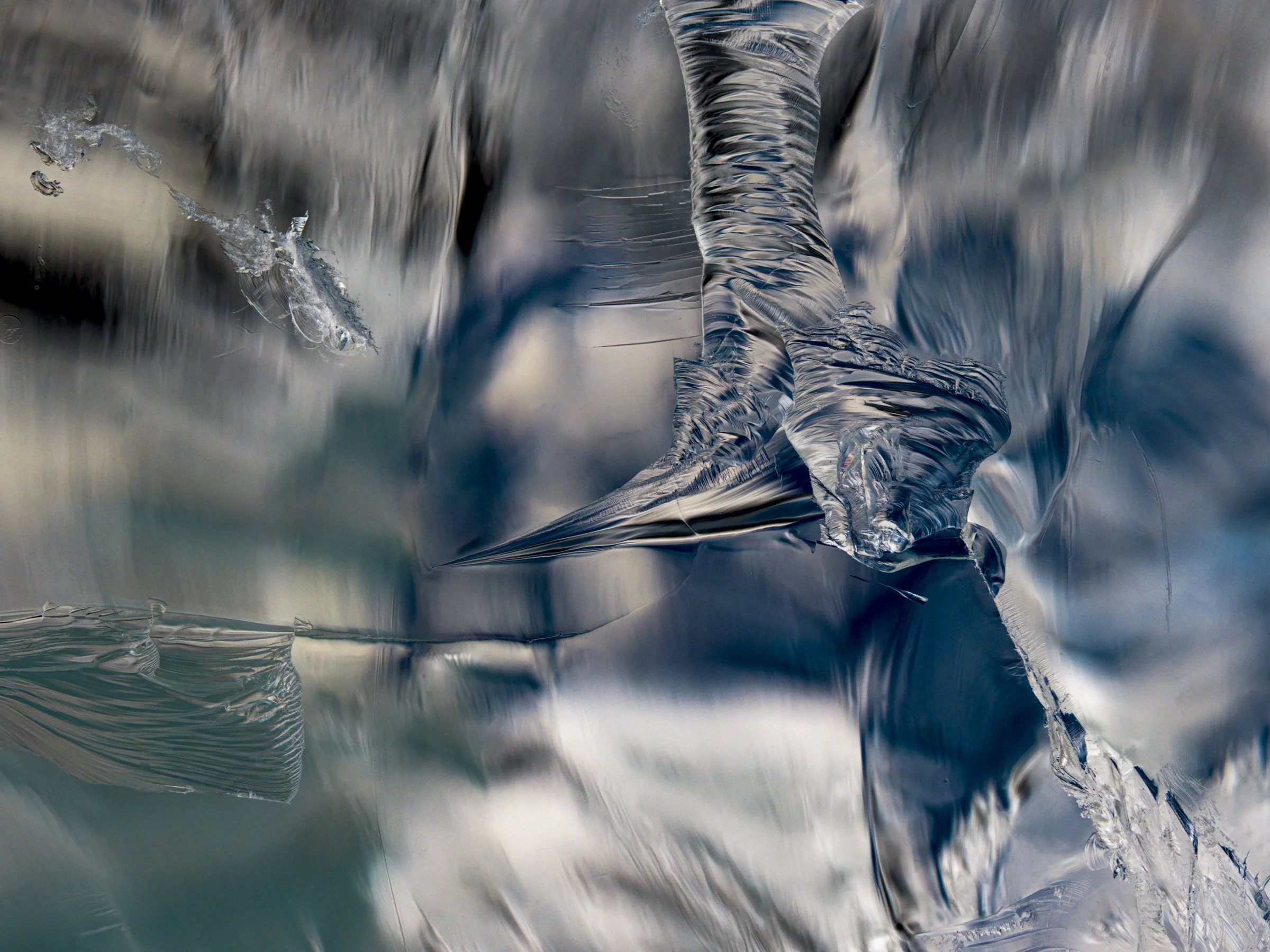
WHEN DOES CHANCE ENTER THE PROCESS?
Almost immediately.
I can establish the setup, but at this scale very small changes have consequences. A slight movement of the camera, a shift in light or a change in angle can completely alter what I see.
I don't think of chance as something that interrupts the process. It's part of the process.
My role is to recognise when something unexpected is worth following.
IS THIS DOCUMENTATION?
It begins with photography, but I'm not trying to make a faithful record of the material.
The camera gives me access to something I can't see in the same way with the naked eye. Focus stacking extends that further, allowing different planes of focus to be assembled into a single image.
From there, I'm making decisions about colour, position, scale, composition and selection.
So the photograph may begin as evidence of something that exists, but the finished work is a construction.
WHY IS SCALE SO IMPORTANT?
Scale changes my relationship to the subject.
At one scale I can identify what I'm looking at. As I move closer, that certainty begins to disappear. A fracture can become a horizon. A small plane can begin to feel architectural. A void can become a space.
I'm interested in the point where recognition gives way to another kind of looking.
Scale allows me to enter.
WHEN DO YOU KNOW AN IMAGE IS FINISHED?
Usually when I stop searching.
There can be hundreds of possible images within a single setup. I move through them, change things, return, crop, compare and discard.
Eventually there is an image that holds my attention without asking me to keep looking elsewhere.
It's less about resolving everything than recognising when I've found enough.
WHY HIDDEN LINES?
The title came quite late.
I kept returning to structures that were already present but difficult to see: fractures, inclusions, growth lines, edges and internal divisions that only became apparent through changes in scale and light.
HIDDEN LINES also connected back to architectural drawing. A hidden line describes something that exists within a structure but cannot be seen directly from a particular view. That felt very close to what I was doing with the camera.
I wasn’t inventing these structures. I was looking for them, changing the conditions until something previously concealed became visible.
The title shifted the emphasis away from what the material is and towards what might be discovered within it.
WHAT DOES SCALE ALLOW YOU TO SEE?
Scale changes the way I understand what I’m looking at.
At one scale I recognise the object. I understand its size, its surface and what it is. As I move closer, those references begin to disappear.
I stop seeing the object and start seeing relationships between lines, planes, fractures, colour, light and void.
That shift is important to me. Scale isn’t simply a way of making something small appear large. It allows me to enter the material and experience it as a space.
At that point, the camera is no longer documenting the object. It is helping me explore it.
WHAT'S NEXT?
I think what's next is to stay with the questions for longer.
HIDDEN LINES has opened up a broader investigation into scale, material, light and observation. Rather than moving quickly from one subject to another, I will follow that investigation more deeply.
I will continue to test, photograph, make, read and write, allowing one discovery to lead to another. Some experiments will become artworks. Others will simply point towards the next question.
Crystal is one point of entry. The investigation will move through other materials, structures and conditions.
The search continues.